In modern manufacturing environments, precision, repeatability, and efficiency are essential for producing high-quality components. One of the most critical factors that directly influences machining accuracy and production stability is the use of properly engineered custom fixtures. Custom fixture solutions are designed to securely locate, support, and clamp workpieces during machining operations, ensuring consistent results even in complex manufacturing processes.
At ASPAVA Makina, custom fixture design is approached as a core engineering discipline. Rather than relying on generic workholding methods, each fixture is carefully engineered to match the geometry, tolerance requirements, and machining strategy of the part being produced. This approach allows manufacturers to achieve higher productivity, improved dimensional accuracy, and greater operational reliability.
The Importance of Custom Fixtures in Manufacturing
Fixtures serve as the foundation of precision machining. They ensure that every workpiece is positioned in exactly the same location during each machining cycle. Without properly designed fixtures, machining operations may suffer from:
- Dimensional inaccuracies
- Part movement during cutting
- Increased vibration and chatter
- Poor surface finish
- Extended setup times
Custom fixtures eliminate these issues by providing stable and repeatable workholding solutions that support the workpiece throughout the machining process.

4
By securing the workpiece correctly, fixtures allow cutting tools to perform efficiently while maintaining tight tolerances and consistent quality.
Engineering Approach to Custom Fixture Design
Designing an effective fixture requires a comprehensive understanding of machining dynamics, material properties, and production requirements. Engineers must consider several critical factors during the fixture development process.
Workpiece Geometry
Every component has unique surfaces, features, and dimensions that influence fixture design. Engineers analyze the geometry to determine optimal locating points and clamping positions.
Machining Operations
Different machining processes require different fixture characteristics. For example:
- Milling operations require strong clamping forces to resist cutting loads.
- Drilling processes require precise alignment of locating elements.
- 5-axis machining requires fixtures that provide maximum tool accessibility.
Cutting Forces and Stability
During machining, tools generate significant cutting forces that can cause part movement if the fixture is not rigid enough. Custom fixtures must therefore provide sufficient rigidity to resist these forces while maintaining part stability.
Accessibility and Tool Clearance
Fixtures must allow cutting tools to reach all required surfaces without interference. Proper fixture design ensures that toolpaths remain unobstructed, which is especially important in multi-axis machining environments.
Key Components of Custom Fixtures
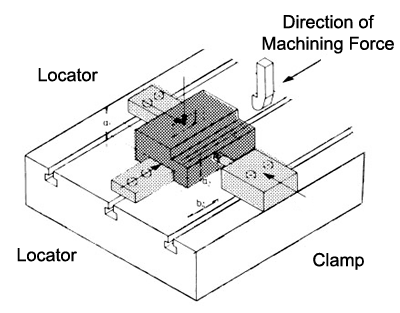
A well-designed fixture typically includes several essential elements that work together to stabilize the workpiece.
Fixture Base
The base plate serves as the structural foundation of the fixture. It is mounted directly on the machine table and provides mounting points for all other components.
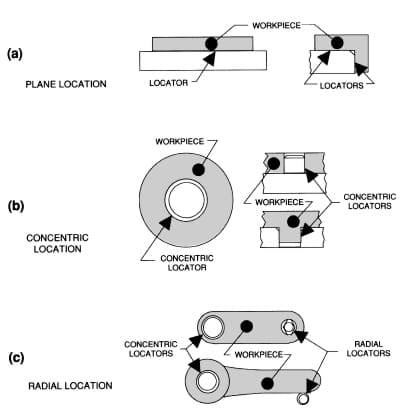
Locating Elements
Locators position the workpiece accurately. Common locating devices include:
- locating pins
- V-blocks
- support pads
- cylindrical locators
These elements ensure that each part is positioned precisely and consistently.
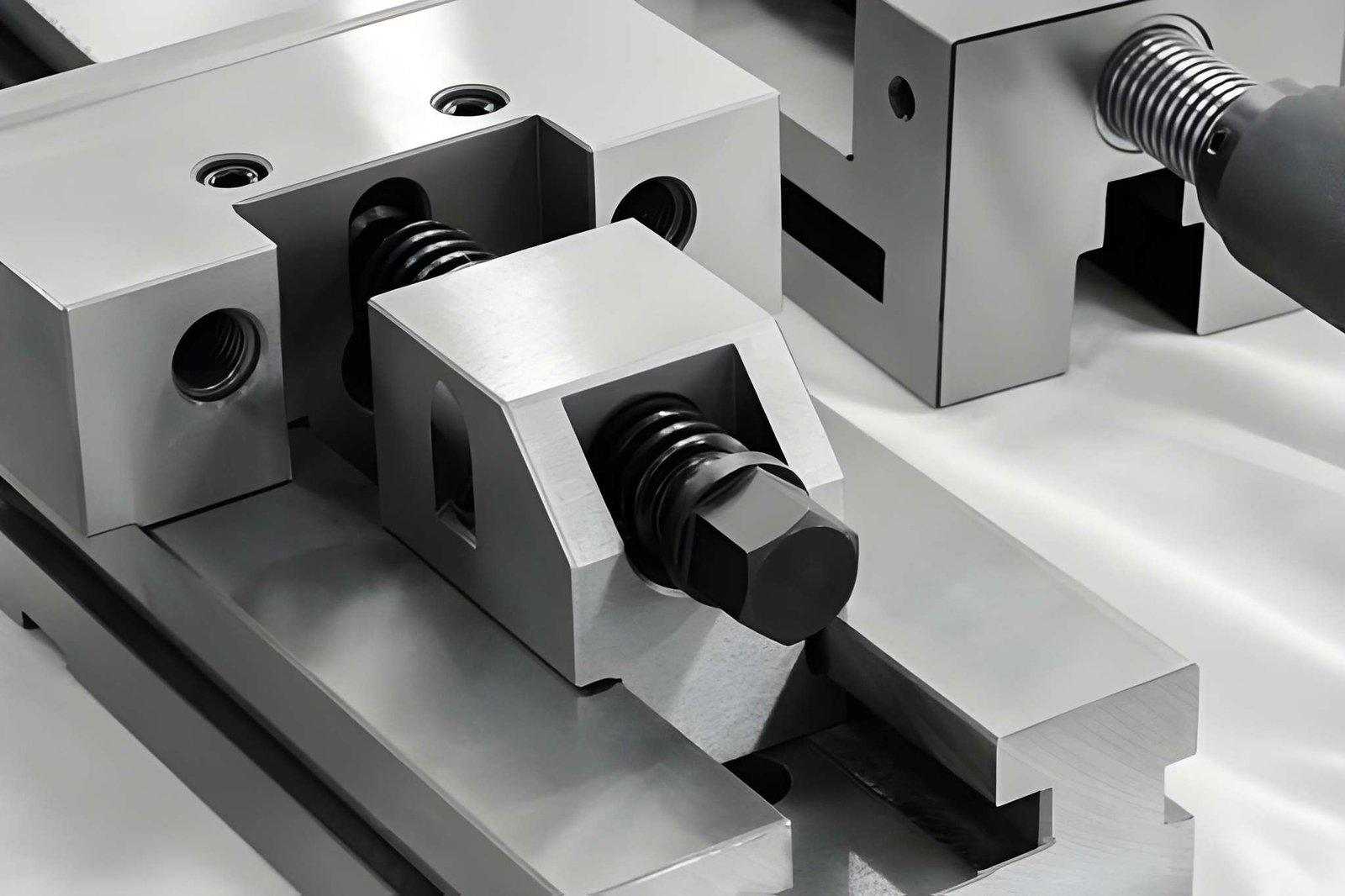
Clamping Systems
Clamps apply controlled force to secure the workpiece against the locating elements. Depending on the production requirements, different clamping systems may be used:
- mechanical clamps
- pneumatic clamps
- hydraulic clamps
- toggle clamps
Support Elements
Support structures prevent workpiece deformation during machining operations. Adjustable supports are often used to provide additional rigidity for complex parts.


4
Advantages of Custom Fixture Solutions
Custom fixtures offer several important advantages compared to general-purpose workholding systems.
Increased Precision
Custom fixtures are designed specifically for a particular component, allowing for precise positioning and improved dimensional accuracy.
Improved Production Efficiency
By minimizing setup time and ensuring consistent positioning, custom fixtures help streamline production processes.
Enhanced Machining Stability
Rigid fixtures reduce vibration and movement during machining operations, resulting in better surface quality and longer tool life.
Repeatability in Mass Production
Custom fixtures enable manufacturers to produce large quantities of identical components with consistent quality.
Custom Fixtures for High-Precision Industries
Many industries rely heavily on custom fixtures due to their demanding precision requirements.
Aerospace Manufacturing
Aerospace components often feature complex geometries and lightweight materials such as aluminum or titanium alloys. Custom fixtures ensure these parts remain stable during high-speed machining operations.
Automotive Production
Automotive manufacturing requires high production volumes and consistent quality. Custom fixtures allow manufacturers to machine engine components, transmission parts, and structural elements with high efficiency.
Industrial Machinery
Heavy machinery components often require rigid fixtures capable of withstanding significant cutting forces.
Digital Design and Simulation in Fixture Engineering
Modern fixture development increasingly relies on advanced digital design tools. CAD software such as SolidWorks allows engineers to design fixtures in a virtual environment before manufacturing them.
Digital design enables engineers to:
- simulate assembly and operation
- analyze potential collisions
- verify dimensional tolerances
- optimize clamping locations
This approach significantly reduces development time and improves the performance of the final fixture.
ASPAVA Makina’s Approach to Custom Fixture Solutions
ASPAVA Makina integrates precision engineering, machining expertise, and advanced digital tools to develop reliable custom fixture solutions for manufacturing industries.
The company’s approach focuses on:
- engineering-driven fixture design
- optimized clamping and locating systems
- high rigidity and stability
- compatibility with advanced CNC machining processes
By combining fixture engineering with modern machining technologies, ASPAVA Makina ensures that each production process operates with maximum efficiency and precision.
Conclusion
Custom fixture solutions are a fundamental element of precision manufacturing. Proper fixture design ensures accurate workpiece positioning, machining stability, and consistent production quality.
Through advanced engineering methods, digital design technologies, and extensive machining experience, ASPAVA Makina delivers professional fixture solutions that support high-precision manufacturing across multiple industries.
These solutions allow manufacturers to achieve greater efficiency, improved accuracy, and reliable production performance in modern industrial environments.