Industrial fixtures play a critical role in modern manufacturing by ensuring precision, repeatability, stability, and productivity during machining operations. In industries such as aerospace, automotive, defense, energy, and heavy machinery, fixtures are essential tools that hold workpieces securely while allowing cutting tools to remove material accurately.
At ASPAVA Makina, fixture design is considered a vital part of the manufacturing process. A well-designed fixture not only ensures part accuracy but also significantly improves machining efficiency, tool life, and production consistency. This article explores the engineering principles behind industrial fixtures, including fixture design methodology, clamping forces, locating strategies, vibration control, and the role of fixtures in high-precision manufacturing.
Understanding Industrial Fixtures and Their Role in Manufacturing
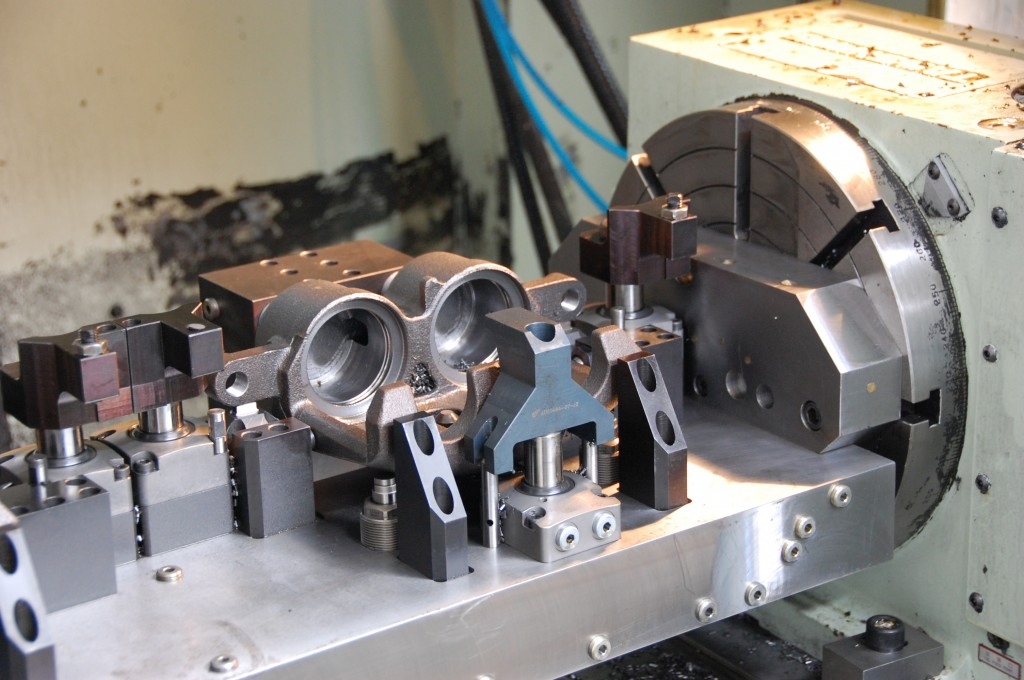
An industrial fixture is a specialized workholding device used to securely position and support a workpiece during machining or manufacturing operations. Unlike general-purpose vises or clamps, fixtures are typically designed specifically for a particular part or family of parts.
Fixtures serve several important functions:
- Accurate positioning of the workpiece
- Secure clamping during machining operations
- Maintaining repeatability in production
- Reducing setup time
- Improving machining stability
Without proper fixturing, machining operations can suffer from dimensional inaccuracies, vibration, tool wear, and inconsistent production quality.

4
Industrial fixtures are widely used in:
- CNC milling operations
- CNC turning operations
- drilling and tapping processes
- grinding operations
- welding and assembly systems
The 3-2-1 Locating Principle in Fixture Design
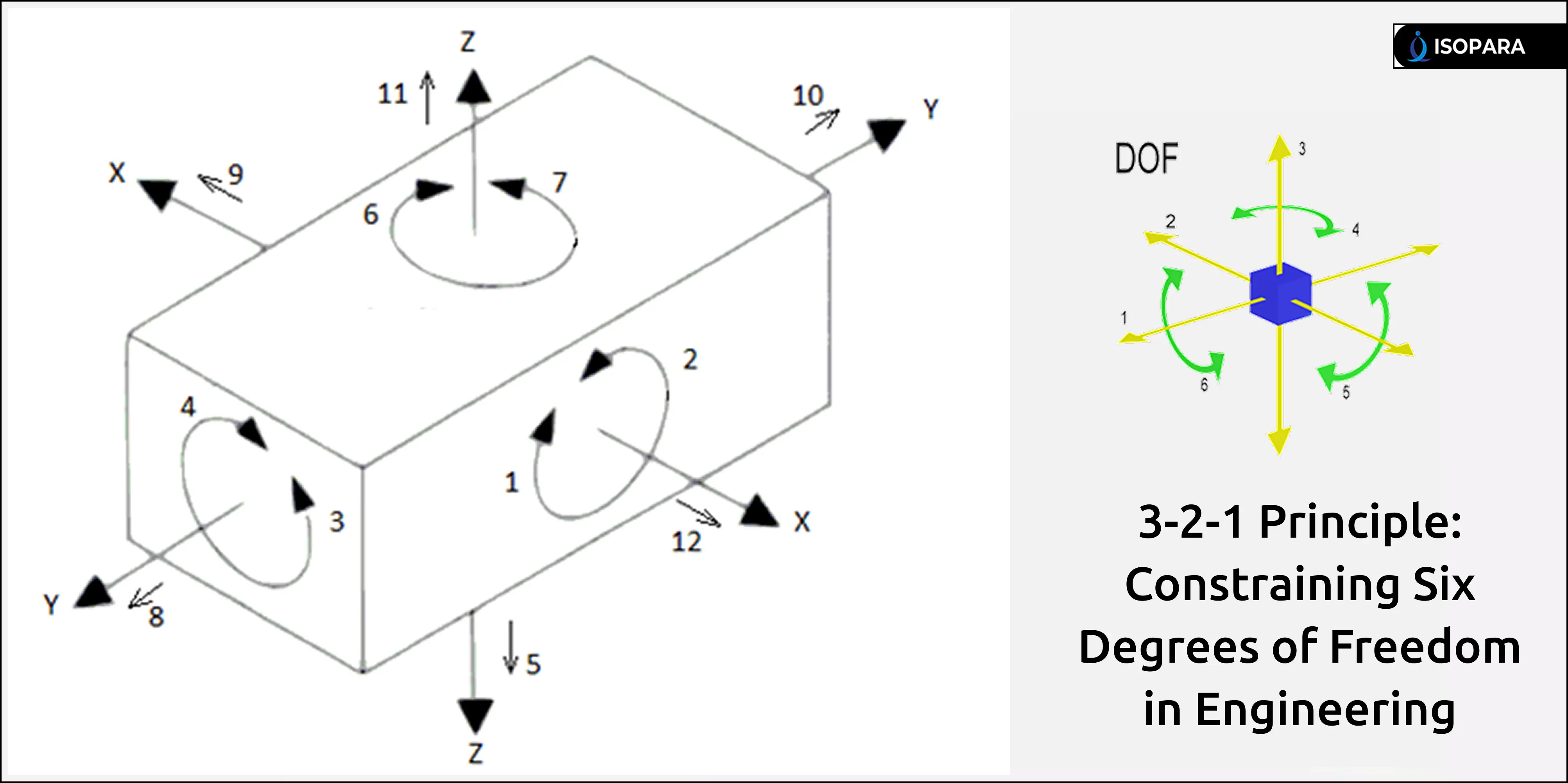
One of the most fundamental concepts in fixture design is the 3-2-1 locating principle, which ensures accurate and stable positioning of the workpiece.
Every solid object has six degrees of freedom:
- movement along X axis
- movement along Y axis
- movement along Z axis
- rotation around X axis
- rotation around Y axis
- rotation around Z axis
The 3-2-1 principle eliminates these degrees of freedom using strategically placed locating points.


4
The principle works as follows:
Three locating points support the workpiece from the bottom surface, eliminating movement along the Z-axis and rotations around X and Y.
Two locating points on a vertical surface prevent movement along the Y-axis and rotation around Z.
One locating point on another vertical surface prevents movement along the X-axis.
This method fully constrains the workpiece while avoiding over-constraining, which could cause deformation.
Key Components of Industrial Fixtures
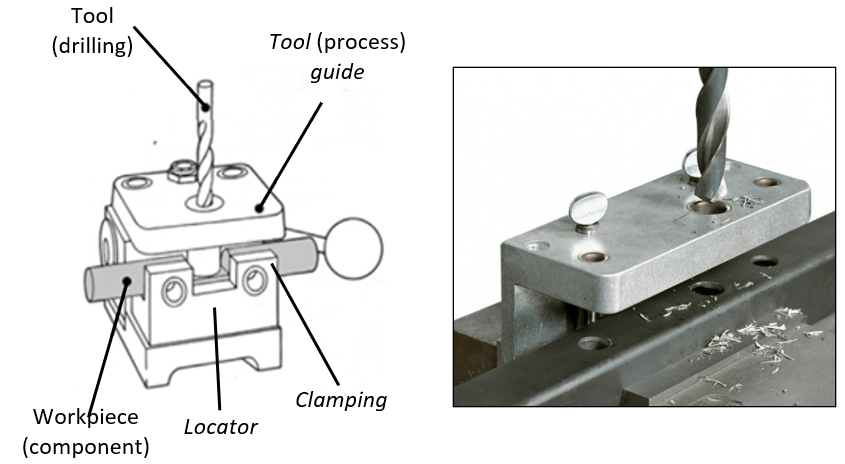
A typical CNC machining fixture consists of several critical components designed to provide stability and precision.
Fixture Base Plate
The base plate is the main structural element of the fixture. It is mounted on the CNC machine table and supports all other components.
Requirements for base plates:
- high rigidity
- dimensional stability
- precise mounting holes
- compatibility with machine T-slots or grid systems
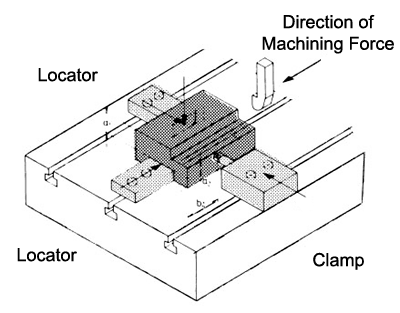
Locating Elements
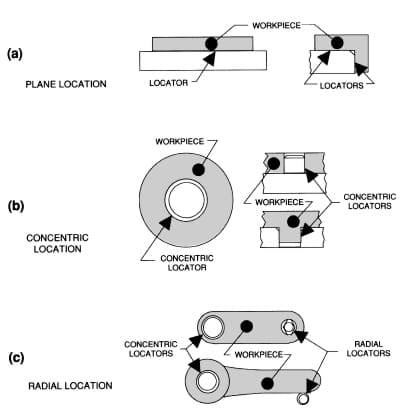
Locators determine the exact position of the workpiece.
Common types include:
- locating pins
- V-block locators
- cylindrical locators
- diamond pins
These elements ensure that each part is positioned consistently in every machining cycle.
Clamping Mechanisms
Clamps apply force to secure the workpiece against the locating surfaces.
Common clamping systems:
- mechanical clamps
- hydraulic clamps
- pneumatic clamps
- toggle clamps
Supporting Elements
Supports prevent deformation caused by cutting forces.
Examples include:
- adjustable supports
- rest pads
- backup supports

4
Clamping Force Calculations in Fixture Design
Proper clamping force is essential to maintain part stability without causing deformation.
Clamping force must be sufficient to counteract cutting forces generated during machining.
A simplified formula used in fixture design is:
Clamping Force ≥ Cutting Force × Safety Factor
Cutting forces depend on:
- material hardness
- depth of cut
- feed rate
- tool geometry
Example:
If a milling operation generates a cutting force of 800 N and a safety factor of 2 is applied:
Required clamping force =
800 × 2 = 1600 N
Engineers must carefully balance clamping force to avoid:
- part movement
- part deformation
- fixture damage
Fixture Rigidity and Vibration Control
Rigidity is one of the most important factors in fixture design.
During machining, cutting forces generate vibrations that can affect surface quality and dimensional accuracy.
Sources of vibration include:
- tool chatter
- machine structure flexibility
- insufficient clamping
- long tool overhang


4
To minimize vibration, fixture designers focus on:
- rigid base structures
- short force paths
- strong clamping systems
- optimized support placement
At ASPAVA Makina, fixture rigidity is carefully engineered to ensure stable machining conditions even during high-speed machining operations.
Materials Used in Fixture Construction
Fixture components must withstand mechanical loads, temperature changes, and repeated production cycles.
Common materials include:
Tool Steel
Highly durable and wear-resistant, often used for locating pins and clamping elements.
Alloy Steel
Provides excellent strength for structural components.
Aluminum
Lightweight and corrosion resistant, often used in modular fixtures.
Cast Iron
Excellent vibration damping properties, commonly used for base plates.
Material selection depends on:
- expected cutting forces
- fixture size
- production volume
- environmental conditions
Modular vs Dedicated Fixtures
Fixtures can be categorized into two main types.
Modular Fixtures
Modular fixtures consist of interchangeable components assembled for different parts.
Advantages:
- flexibility
- reduced design time
- lower cost for small batches
Dedicated Fixtures
Dedicated fixtures are designed specifically for a single part.
Advantages:
- maximum stability
- faster setup
- optimized productivity
ASPAVA Makina uses both modular and dedicated fixtures depending on the production requirements.
Fixture Design for High-Speed CNC Machining
High-speed machining places additional demands on fixture design.
Important considerations include:
- higher cutting forces
- dynamic vibration effects
- thermal expansion
Fixtures for high-speed machining must provide:
- strong clamping systems
- excellent rigidity
- minimal interference with tool paths
Advanced fixture design also considers tool accessibility, ensuring that cutting tools can reach all required surfaces without collision.
Digital Fixture Design with CAD/CAM
Modern fixture design relies heavily on digital engineering tools.
Software such as SolidWorks allows engineers to design and simulate fixtures before manufacturing them.
Benefits include:
- collision detection
- load analysis
- assembly simulation
- tolerance verification
This digital approach significantly reduces design errors and improves fixture performance.
Quality Control in Fixture Manufacturing
Precision fixtures must be manufactured with high accuracy to ensure consistent positioning of workpieces.
Inspection methods include:
- coordinate measuring machines (CMM)
- surface flatness inspection
- pin position measurement
- alignment verification
Any deviation in fixture components can lead to inaccuracies in the machined parts.
ASPAVA Makina’s Expertise in Industrial Fixtures
ASPAVA Makina integrates fixture engineering with CNC machining expertise to ensure optimal manufacturing performance.
The company focuses on:
- precision fixture design
- high rigidity structures
- optimized clamping systems
- machining stability
This approach allows ASPAVA Makina to deliver high-precision components with excellent repeatability.
Through engineering knowledge and advanced machining technologies, ASPAVA Makina demonstrates strong capabilities in both fixture design and precision CNC manufacturing.
Conclusion
Industrial fixtures are essential tools that enable precision machining, consistent production quality, and efficient manufacturing processes. Proper fixture design requires a deep understanding of mechanical engineering principles, cutting forces, vibration control, and manufacturing requirements.
By applying advanced engineering methods and precision machining expertise, ASPAVA Makina develops reliable fixture solutions that support high-performance manufacturing operations.
These capabilities ensure that every component produced meets the highest standards of accuracy, stability, and quality.