
4
In high-precision CNC machining, process stability is one of the most critical factors that determines the quality, repeatability, and efficiency of the manufacturing process. Even with advanced CNC machines and high-performance cutting tools, unstable machining conditions can lead to poor results.
One of the most influential yet sometimes underestimated elements in machining stability is workholding. The way a workpiece is clamped and supported during machining directly affects vibration levels, dimensional accuracy, surface quality, and overall process reliability.
For industries such as aerospace manufacturing, medical device production, mold making, and high-performance mechanical engineering, stable workholding systems are essential for maintaining consistent machining quality.
What is Process Stability in CNC Machining?
Process stability refers to the ability of a machining operation to maintain consistent cutting conditions throughout the entire manufacturing cycle.
A stable machining process ensures:
- consistent dimensional accuracy
- predictable tool performance
- high surface quality
- reduced vibration and chatter
- repeatable production results
When machining processes become unstable, even small disturbances can lead to serious problems such as dimensional variation or tool failure.
Stable machining environments are therefore essential for high-precision manufacturing.
The Role of Workholding in Machining Stability
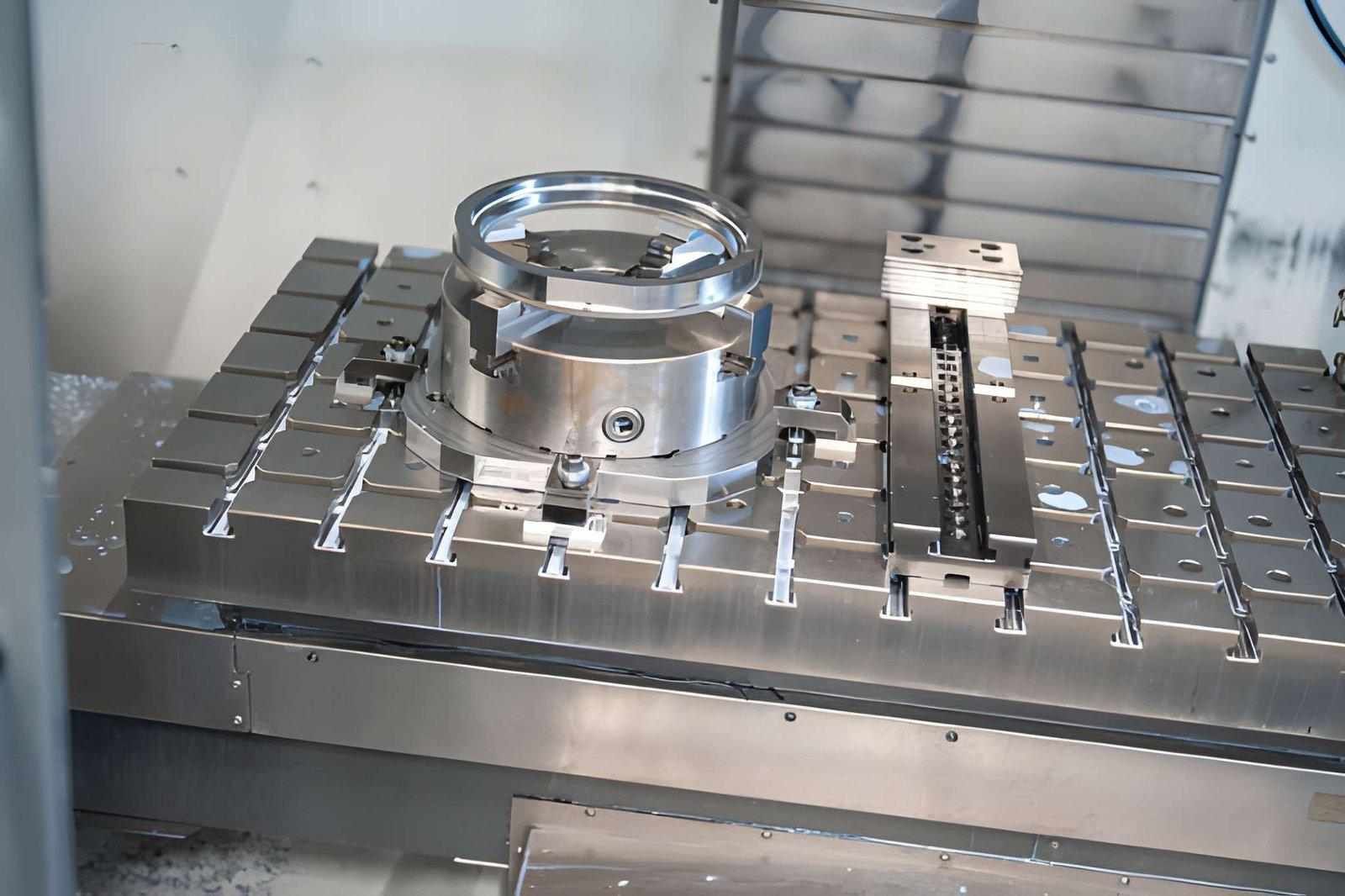
Workholding systems provide the physical interface between the CNC machine and the workpiece. Their primary role is to hold the workpiece securely in the correct position while resisting the forces generated during machining.
An effective workholding system must provide:
- high clamping rigidity
- precise positioning
- vibration resistance
- consistent repeatability
If the workholding system is not sufficiently rigid, cutting forces can cause the workpiece to move or vibrate during machining. Even extremely small movements can negatively affect machining accuracy.
Sources of Instability in CNC Machining
Machining instability can originate from several sources, but workholding plays a major role in many cases.
Common causes of process instability include:
Insufficient Clamping Force
If the workpiece is not clamped firmly enough, cutting forces can cause micro-movements during machining.
Excessive Workpiece Height
Parts that are clamped too high above the base surface create leverage that amplifies vibration.
Poor Fixture Design
Improper fixture design can distribute cutting forces unevenly, leading to unstable machining conditions.
Weak Contact Surfaces
Insufficient contact between the workpiece and the clamping surfaces reduces stability.
Engineering-focused workholding solutions address these issues by improving rigidity and load distribution.
Workholding in High Precision Machining
High precision machining environments require extremely stable setups. Tolerances in aerospace and medical applications can reach micron-level accuracy, making process stability even more critical.
Stable workholding systems help ensure:
- consistent tool engagement
- minimal vibration during cutting
- improved dimensional accuracy
- longer tool life
In many cases, improving the workholding system can significantly improve machining results without changing the machine or cutting tools.
Workholding Challenges in Multi-Axis Machining
Modern production increasingly relies on 5-axis machining to produce complex components. However, multi-axis machining introduces additional stability challenges.
In 5-axis machining:
- workpieces are often elevated for tool access
- cutting forces change direction frequently
- tool paths become more complex
These factors increase the importance of stable workholding.
Compact 5-axis vise systems are designed to reduce clamping height while maintaining strong clamping forces. This design helps improve stability while providing the accessibility required for multi-axis machining.
Engineering Approach to Stable Workholding
Achieving stable machining processes requires a systematic engineering approach.
Workholding systems must be designed to balance:
- clamping rigidity
- accessibility for cutting tools
- workpiece support
- resistance to machining forces
Modern workholding systems combine mechanical engineering principles with precision manufacturing to create stable machining environments.
Advanced Workholding Solutions by Torque Component
Modern high-precision machining environments require advanced engineering solutions rather than simple clamping devices.
Torque Component develops professional workholding technologies designed to improve machining stability and process reliability.
These solutions include:
- precision CNC vise systems
- compact 5-axis workholding solutions
- modular clamping technologies
- advanced workholding systems for high-precision machining
Torque Component systems are designed to support stable machining processes and improve productivity in demanding manufacturing environments.
Explore engineering workholding solutions at:
https://www.torqueconponent.com
Precision Manufacturing Expertise by Aspava Makina
Advanced workholding systems require extremely precise manufacturing to maintain long-term durability and performance.
Aspava Makina supports the development and production of high-precision workholding components through expertise in:
- multi-axis CNC machining
- fixture manufacturing
- precision mechanical components
- advanced CNC production technologies
Through advanced manufacturing capabilities and engineering expertise, Aspava Makina contributes to the production of reliable workholding technologies used in modern precision machining environments.
Learn more about manufacturing capabilities at:
https://www.aspavamakina.com
Conclusion
Process stability is a fundamental requirement for high-precision CNC machining. Stable machining conditions allow manufacturers to achieve consistent accuracy, improved surface quality, and reliable production results.
Workholding systems play a critical role in achieving this stability by securely positioning the workpiece and resisting machining forces.
Engineering-driven workholding technologies developed by Torque Component, supported by the precision manufacturing capabilities of Aspava Makina, help manufacturers create stable and efficient machining environments for modern precision manufacturing.
İstersen bir sonraki makale çok güçlü bir konu olabilir ve Torque için ciddi SEO getirir:
Choosing the Right CNC Vise for Precision Machining
Bu makale şu kelimelerde çıkabilir:
- CNC vise
- precision vise
- workholding vise
- CNC vise system
ve Torque ürünlerini doğrudan ama profesyonel şekilde konumlandırır.