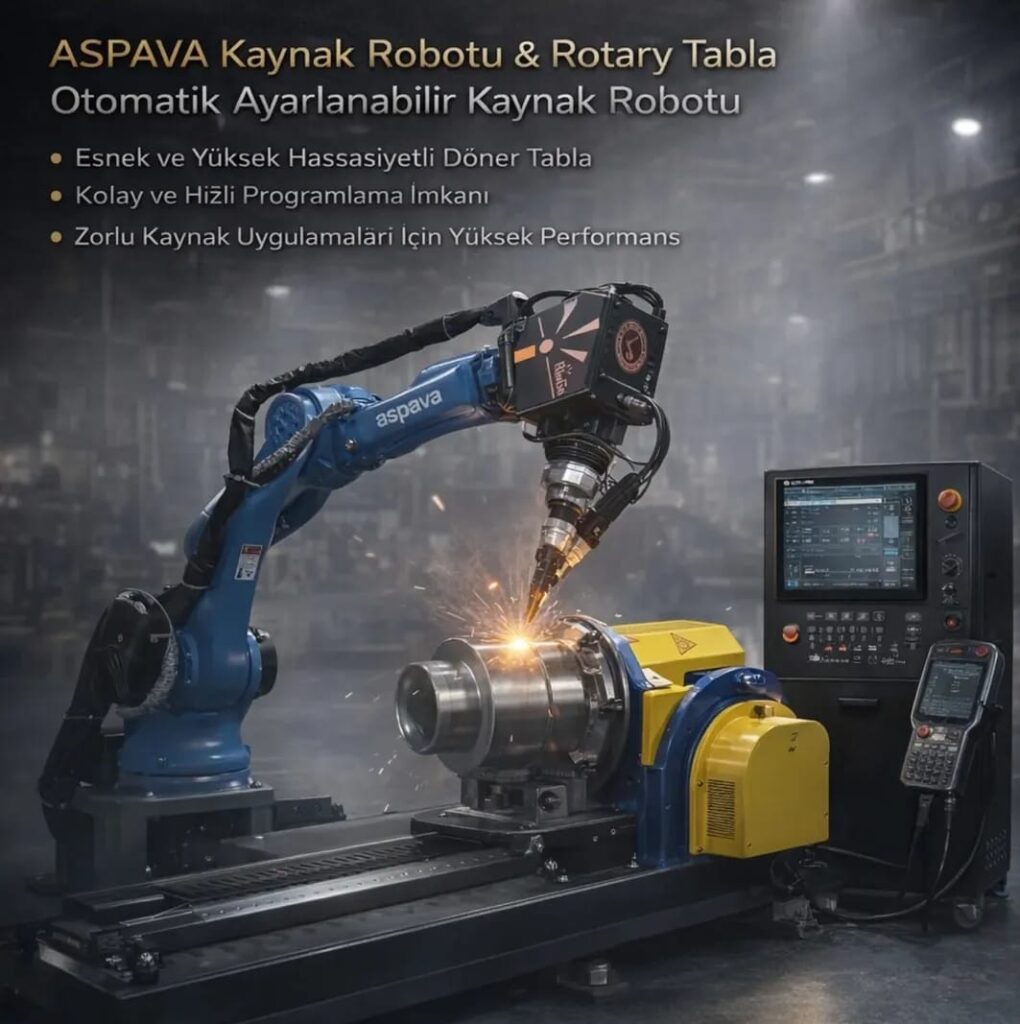
Advanced Manufacturing Technologies for the Aerospace Industry
The aerospace industry represents one of the most demanding fields in modern engineering. Aircraft structures, propulsion systems, and critical mechanical components require extremely high levels of precision, reliability, and performance.
Manufacturing components for aerospace applications involves strict quality requirements, advanced materials, and highly controlled production processes. Even the smallest deviation in manufacturing accuracy can affect safety, performance, and reliability.
For this reason, high precision CNC machining plays a critical role in the production of aerospace components.
Companies with advanced machining capabilities, such as ASPAVA Engineering, support modern manufacturing industries by providing precision CNC machining solutions for complex industrial components.
More information about ASPAVA’s manufacturing capabilities can be found here:
https://www.aspavamakina.com
The Importance of Precision in Aerospace Manufacturing
Precision is the foundation of aerospace engineering.
Aircraft components must operate under extreme conditions including:
- high mechanical loads
- temperature fluctuations
- vibration and dynamic stress
- harsh environmental conditions
To ensure reliability under these conditions, aerospace components must be manufactured with extremely tight tolerances.
CNC machining allows engineers to produce components with micrometer-level accuracy while maintaining consistent quality during production.
Advanced machining technologies make it possible to manufacture complex aerospace parts that would be impossible to produce using conventional manufacturing methods.
Materials Used in Aerospace CNC Machining
Aerospace components are often manufactured from high-performance materials designed to withstand extreme operating conditions.
Some of the most commonly used aerospace materials include:
Titanium Alloys
Titanium is widely used in aircraft structures due to its excellent strength-to-weight ratio and corrosion resistance.
Typical aerospace titanium applications include:
- structural airframe components
- landing gear parts
- engine components
Titanium machining requires advanced CNC technologies because of its high strength and low thermal conductivity.
Inconel Superalloys
Inconel is commonly used in aerospace engines and high-temperature environments.
These nickel-based superalloys maintain mechanical strength even at extremely high temperatures.
Typical applications include:
- turbine components
- combustion systems
- aerospace propulsion systems
Machining Inconel requires rigid CNC machines, specialized cutting tools, and optimized machining parameters.
Aluminum Alloys
Aluminum remains one of the most widely used materials in aerospace manufacturing due to its lightweight properties and good machinability.
Aluminum components are commonly used in:
- aircraft structural panels
- brackets and housings
- internal mechanical systems
CNC machining allows aluminum components to be manufactured quickly while maintaining excellent surface quality.
CNC Machining Technologies for Aerospace Components
Manufacturing aerospace components requires advanced machining technologies capable of producing highly complex geometries.
Modern CNC machining technologies include:
Multi-Axis Machining
5-axis CNC machines allow cutting tools to approach the workpiece from multiple angles.
This capability enables the production of complex aerospace components with minimal setups.
High-Speed Machining
High-speed machining technologies improve production efficiency while maintaining surface quality and dimensional accuracy.
Advanced Tooling Systems
High-performance cutting tools and optimized tool paths are essential for machining advanced aerospace materials.
These technologies ensure stable machining processes and improved tool life.
Prototype Development in Aerospace Manufacturing
Before aerospace components enter full-scale production, engineers must first evaluate prototypes and design models.
Prototype development allows engineers to test:
- aerodynamic performance
- structural strength
- assembly compatibility
CNC machining technologies enable the rapid production of prototype components used in engineering validation processes.
Companies capable of producing both prototype models and final production components are able to support the entire product development cycle.
ASPAVA Engineering and Precision Manufacturing
Manufacturing companies with strong engineering capabilities contribute significantly to modern industrial production.
ASPAVA Engineering, based in Türkiye, provides advanced CNC machining services and engineering solutions for industrial applications.
The company operates in several manufacturing areas including:
- precision CNC machining
- fixture and workholding systems
- industrial automation solutions
- prototype manufacturing
- advanced engineering solutions
By combining modern CNC machining technologies with engineering expertise, ASPAVA supports the production of complex components used in demanding industrial environments.
More information about ASPAVA can be found here:
Türkiye as an Emerging Aerospace Manufacturing Partner
Türkiye has become an increasingly important manufacturing partner for European industries.
Many international companies collaborate with Turkish manufacturing firms due to their strong engineering capabilities, competitive production costs, and strategic geographic location.
Companies such as ASPAVA Engineering contribute to this growing manufacturing ecosystem by providing precision machining and advanced manufacturing solutions.
The Future of Aerospace CNC Machining
The aerospace industry continues to evolve with new materials, advanced manufacturing techniques, and digital engineering tools.
Future developments in aerospace machining may include:
- intelligent machining systems
- automated manufacturing cells
- advanced digital twin technologies
- AI-assisted machining optimization
These technologies will further improve production efficiency and component performance.
Manufacturing companies capable of adapting to these innovations will play an important role in the future of aerospace engineering.
Conclusion
High precision CNC machining is an essential technology in aerospace manufacturing.
The production of aerospace components requires advanced machining technologies, high-performance materials, and strict quality control.
Companies with strong engineering capabilities and modern CNC machining systems can support the manufacturing of complex components used in demanding industrial environments.
Engineering companies such as ASPAVA Engineering contribute to this field by providing precision machining solutions and advanced manufacturing capabilities.
For more information about ASPAVA’s manufacturing services, visit: