

4
Modern manufacturing industries depend heavily on precision tooling. Every automotive panel, plastic product, or electronic component begins with a carefully engineered mold or die. But how are these highly accurate tools produced? The answer lies in advanced CNC machining technologies, which have become the foundation of tool and die manufacturing.
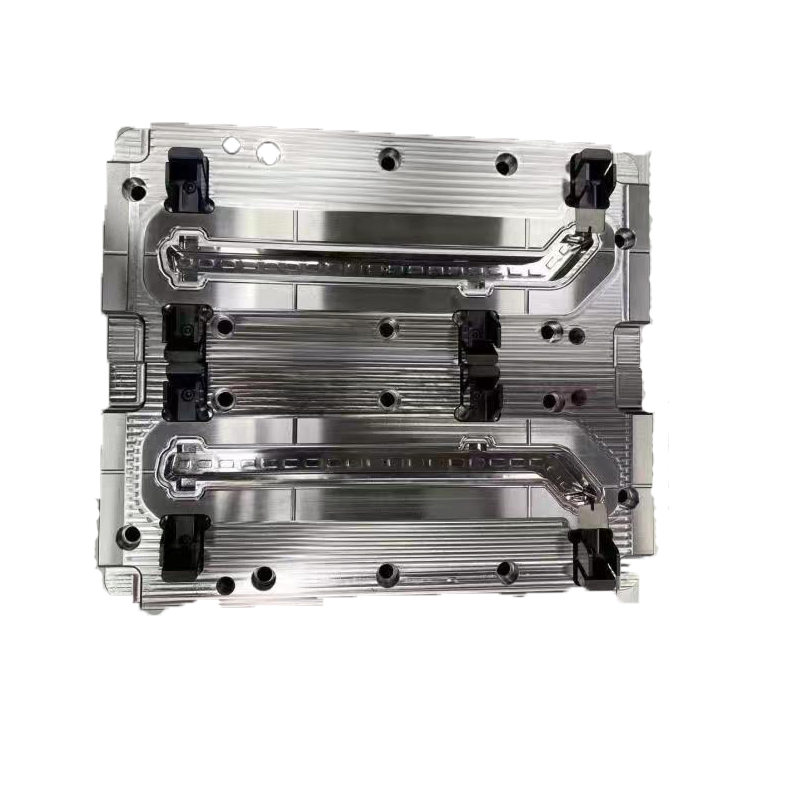
CNC machining enables engineers to produce mold cores, cavities, die plates, and complex tooling components with micron-level accuracy. Without this technology, achieving the precision required in modern production would be nearly impossible.
Why is CNC Machining Essential for Tool and Die Manufacturing?
Think about a simple question:
How can manufacturers produce millions of identical parts without variation?
The answer is precision tooling. And precision tooling requires manufacturing methods capable of producing extremely accurate components. CNC machining makes this possible by controlling machine movements through computer programs instead of manual operations.
When machining mold components or die plates, even a small dimensional error can affect thousands of produced parts. CNC machines eliminate much of the human error found in traditional machining by following exact digital instructions generated from CAD/CAM systems.
As a result, manufacturers can maintain consistent production quality across long manufacturing cycles.
How Does CNC Machining Improve Tool Accuracy?
Another important question to consider:
What determines the accuracy of a mold or die?
The answer is the machining precision of its components. Mold cavities, die surfaces, and guide systems must align perfectly to ensure that each produced part matches the intended design.
CNC machining improves accuracy through several key capabilities:
- High Dimensional Precision
Modern CNC machines can achieve tolerances within microns. This ensures that mold components fit together perfectly. - Repeatable Manufacturing Processes
Once a CNC program is created, the same machining process can be repeated multiple times with identical results. - Stable Machine Control Systems
CNC machines use servo motors and digital feedback systems to maintain consistent tool paths.
Because of these capabilities, CNC machining is widely used to manufacture tooling components that must maintain extremely tight tolerances.
Why Are 5-Axis CNC Machines Important for Complex Tooling?
A common challenge in tool and die manufacturing is producing complex three-dimensional geometries.
Consider this question:
How can engineers machine deep mold cavities or curved die surfaces with high accuracy?
Traditional 3-axis machining often requires multiple setups, increasing the risk of alignment errors. However, 5-axis CNC machining allows the cutting tool to approach the workpiece from multiple angles in a single setup.
This provides several advantages:
- Machining complex mold cavities in a single operation
- Improved surface quality on curved geometries
- Reduced machining time and setup errors
- Better tool accessibility for deep cavities
For industries such as automotive and aerospace, where tooling complexity is constantly increasing, 5-axis machining has become an essential manufacturing technology.
How Does CNC Machining Improve Surface Quality?
Surface quality plays a critical role in mold and die performance. A poorly finished mold cavity can cause product defects, poor material flow, or surface imperfections in the final part.
So the next logical question is:
How do manufacturers achieve smooth and precise mold surfaces?
CNC machining allows engineers to control cutting parameters such as tool speed, feed rate, and tool path strategies with high precision. Advanced finishing operations use specialized tools to create extremely smooth surfaces.
Better surface quality leads to:
- Improved plastic flow in injection molds
- Reduced friction in stamping dies
- Higher quality finished products
- Reduced need for manual polishing
As a result, CNC machining significantly improves the functional performance of molds and dies.
The Impact of CNC Machining on Production Efficiency
Another important question worth exploring:
How does CNC machining affect manufacturing speed?
Traditional tooling manufacturing required multiple manual setups and extensive operator involvement. Today, automated CNC machining centers can run continuously with minimal supervision.
This brings several advantages:
- Shorter production lead times
- Reduced manual labor requirements
- Higher productivity in tooling manufacturing
Manufacturers can produce molds and dies faster while maintaining high levels of precision and consistency.
CNC Machining and the Future of Tooling Engineering
The role of CNC machining continues to expand as manufacturing technologies evolve. Modern production environments increasingly integrate CNC machining with digital engineering tools such as simulation software and automated inspection systems.
This leads to an important forward-looking question:
What will the future of tool and die manufacturing look like?
The answer involves greater integration of technologies such as:
- Smart CNC machines with real-time monitoring
- AI-driven machining optimization
- Hybrid manufacturing combining CNC machining and additive manufacturing
These innovations will allow manufacturers to design and produce even more complex tooling systems while reducing development time.
Conclusion
CNC machining has fundamentally transformed tool and die manufacturing. By enabling highly precise, repeatable, and efficient machining processes, CNC technology allows engineers to produce complex molds and dies that support modern industrial production.
From automotive components to consumer electronics and medical devices, nearly every manufactured product begins with precision tooling created through advanced CNC machining.
As manufacturing continues to evolve toward automation and smart production systems, CNC machining will remain a cornerstone technology driving innovation in tool and die engineering.