Building the Next Generation of Intelligent Manufacturing
Manufacturing is entering a new era. Rapid technological developments, increasing global competition, and the growing demand for higher precision are transforming how factories operate. Traditional production models that rely heavily on manual operations and operator-dependent processes are gradually being replaced by intelligent manufacturing systems that combine automation, robotics, and advanced engineering solutions.
At the center of this transformation is the concept of the Smart Factory — a production environment where machines, automation systems, and human expertise work together to create efficient, stable, and highly reliable manufacturing processes.
The vision of ASPAVA is to support this transformation by developing advanced fixture systems, precision workholding technologies, and robotic automation solutions that enable manufacturers to achieve consistent quality, high productivity, and sustainable production.
The Challenge of Modern Manufacturing
Modern factories face a complex set of challenges. Manufacturers are expected to produce parts faster, with higher accuracy, and at lower costs than ever before. At the same time, product designs are becoming more complex and production cycles are becoming shorter.
One of the most difficult problems in manufacturing is maintaining consistent quality in high-volume production.
Even in well-organized factories, production quality can be affected by several factors:
- operator errors
- inconsistent workholding setups
- unstable machining conditions
- manual loading and positioning mistakes
- variability between production cycles
These problems may seem small on an individual level, but over thousands or millions of parts they can lead to significant losses in productivity and quality.
The future of manufacturing therefore depends on creating stable and repeatable production environments where variability is minimized and processes are controlled with precision.
Smart Factories Require Intelligent Workholding
When discussing smart factories, many people immediately think about robots, artificial intelligence, or digital production management systems. While these technologies are important, one fundamental element is often overlooked: workholding.
Every machining operation begins with the workpiece being secured in the correct position. If the workpiece is not properly clamped, even the most advanced CNC machine cannot produce accurate parts.
For this reason, workholding systems play a critical role in achieving stable manufacturing processes.
Modern manufacturing requires precision vise systems, modular fixture solutions, and intelligent clamping technologies that provide:
- repeatable part positioning
- strong and stable clamping force
- compatibility with robotic automation
- efficient loading and unloading operations
ASPAVA develops workholding solutions designed specifically for modern automated production environments.
Automation as a Key to Consistent Production
Automation has become one of the most important drivers of modern manufacturing efficiency.
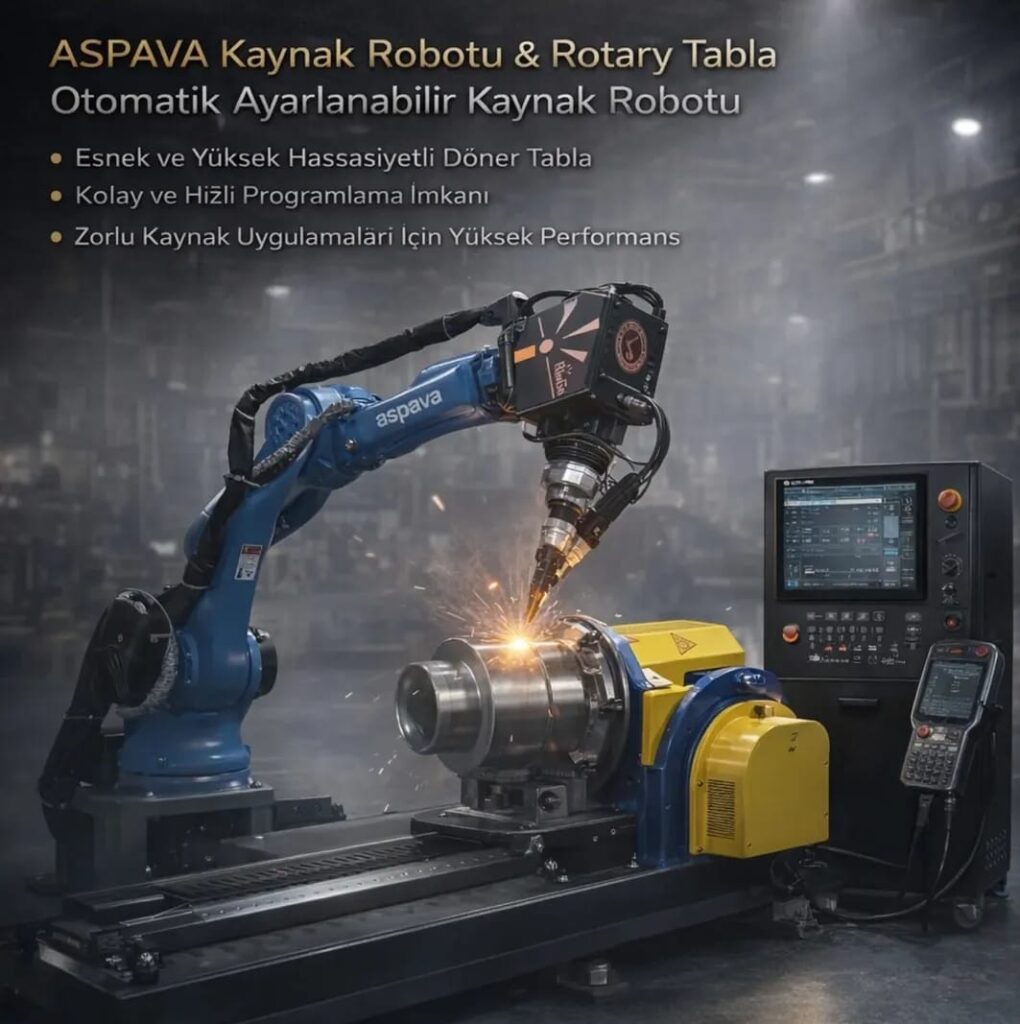
Industrial robots can perform repetitive tasks with remarkable precision and consistency. When integrated with CNC machining centers, robotic systems can automate tasks such as:
- loading and unloading workpieces
- transferring components between machines
- handling finished parts
- supporting automated inspection processes
By reducing manual operations, automation helps eliminate many sources of production variability.
This leads to several advantages:
- higher production speed
- consistent product quality
- reduced operator dependency
- improved workplace safety
ASPAVA supports automated production by developing fixture systems and workholding technologies optimized for robotic integration.
Poka-Yoke and Error-Proof Manufacturing
One of the most effective strategies for improving manufacturing reliability is the implementation of Poka-Yoke principles.
Poka-Yoke, a concept originally developed in Japanese manufacturing systems, focuses on designing processes that prevent errors from occurring.
Instead of relying solely on human attention, Poka-Yoke systems use mechanical design, sensors, or automation to ensure that mistakes cannot easily happen.
Examples of Poka-Yoke solutions in CNC manufacturing include:
- fixtures that allow only one correct part orientation
- positioning systems that ensure accurate alignment
- automated clamping verification
- sensor-based process monitoring
ASPAVA integrates error-proof design principles into its fixture and automation solutions, helping manufacturers reduce operator errors and maintain consistent production quality.
The Role of Robotic Manufacturing Cells
The smart factory vision includes the development of automated manufacturing cells where machines, robots, and workholding systems operate together as a coordinated system.
In a robotic machining cell, a robot loads raw parts into the CNC machine, removes finished components, and prepares the next production cycle.
This approach provides several important advantages:
- continuous production
- reduced machine downtime
- improved process stability
- higher productivity
However, the success of robotic manufacturing cells depends heavily on the reliability of the workholding system.
Fixtures and clamping systems must allow fast, precise, and repeatable part positioning while remaining compatible with robotic handling systems.
ASPAVA designs workholding technologies that support these advanced manufacturing environments.
Lights-Out Manufacturing and the Autonomous Factory
One of the most ambitious goals in modern manufacturing is lights-out production.
Lights-out manufacturing refers to production systems that can operate without direct human supervision. Machines and robots continue producing parts even during nighttime or non-working hours.
This type of production dramatically increases factory efficiency and machine utilization.
However, lights-out manufacturing requires extremely reliable production systems.
Every component of the production process must function consistently, including:
- CNC machines
- robotic handling systems
- fixture and clamping solutions
- quality control processes
ASPAVA contributes to lights-out manufacturing by developing durable, high-precision workholding systems designed for stable and repeatable operation.
Sustainable and Efficient Production
In addition to productivity and precision, sustainability has become an increasingly important goal for modern manufacturing companies.
Efficient production systems reduce waste, minimize energy consumption, and optimize the use of materials and resources.
Automation and intelligent manufacturing technologies support sustainability by improving process control and reducing production errors.
Stable workholding systems also play a role in sustainable manufacturing by:
- reducing scrap rates
- improving machining stability
- extending tool life
- minimizing rework
ASPAVA develops solutions that help manufacturers improve production efficiency while supporting long-term sustainability goals.
ASPAVA’s Vision for the Future of Manufacturing
The future of manufacturing will be defined by integration, intelligence, and automation.
Factories will become increasingly connected environments where machines, robots, and digital systems communicate and coordinate production processes.
In this new manufacturing landscape, companies must adopt technologies that enable:
- flexible production
- consistent quality
- efficient automation
- sustainable operations
ASPAVA’s vision is to support this transformation by developing advanced workholding systems, precision fixture solutions, and robotic automation technologies that enable manufacturers to build smarter and more reliable factories.
By combining engineering expertise with innovative design, ASPAVA aims to help manufacturers achieve the next level of manufacturing performance.