Modern manufacturing industries rely on precision tooling systems to produce high-quality components at scale. One of the most important engineering disciplines supporting this process is mold and die manufacturing. These specialized tools allow manufacturers to transform raw materials—such as metals and plastics—into complex products with high consistency and accuracy.
From automotive body panels to electronic housings and medical equipment components, many industrial products depend on molds and dies during their production process. Without these precision tools, achieving repeatable manufacturing quality would be extremely difficult.
But an important question arises:
Why are molds and dies so critical in modern industrial production?
The answer lies in their ability to control material shape, flow, and forming accuracy during manufacturing operations.
The Engineering Role of Molds and Dies
Molds and dies serve as the physical framework that shapes materials into final products. They determine the exact geometry of parts and ensure that each manufactured component meets strict dimensional requirements.
In manufacturing environments, molds and dies are used for processes such as:
- metal stamping and forming
- plastic injection molding
- forging and extrusion operations
- industrial component production
Each tooling system must be engineered carefully to withstand high production loads while maintaining long-term accuracy.
Consider this question:
What happens if a mold or die is poorly designed or inaccurately manufactured?
Even small tooling errors can lead to:
- dimensional inaccuracies in the final product
- surface defects
- production delays
- increased material waste
Because of this, mold and die manufacturing requires both advanced machining technologies and deep engineering expertise.
Precision Machining in Tool Manufacturing

4
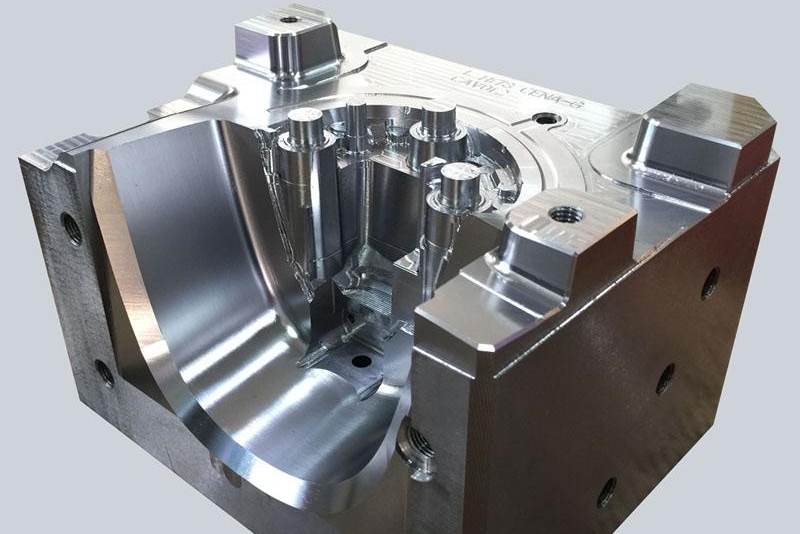
The production of molds and dies relies heavily on advanced CNC machining technologies. CNC machining centers allow engineers to manufacture tooling components with extremely tight tolerances.
These machines follow computer-generated toolpaths created through CAD/CAM systems, ensuring that every machining operation is performed with high accuracy.
Key advantages of CNC machining in mold and die manufacturing include:
- extremely precise dimensional control
- repeatable production processes
- ability to machine complex geometries
- improved surface finishing capability
- reduced manual machining errors
For complex molds and dies, multi-axis CNC machines are often used. These machines allow cutting tools to approach the workpiece from different angles, enabling engineers to machine intricate shapes with fewer setups.
Materials Used in Mold and Die Production
Another important question worth asking is:
What materials are strong enough to handle the extreme conditions of industrial production?
Molds and dies must operate under high pressure, repeated mechanical stress, and elevated temperatures. Therefore, they are typically manufactured from specialized tool steels and hardened alloys.
Common tooling materials include:
- H13 tool steel
- D2 tool steel
- P20 mold steel
- hardened stainless tool steels
These materials offer high wear resistance and long service life, ensuring that molds and dies maintain their accuracy even after thousands or millions of production cycles.
Quality Control in Mold Manufacturing


4
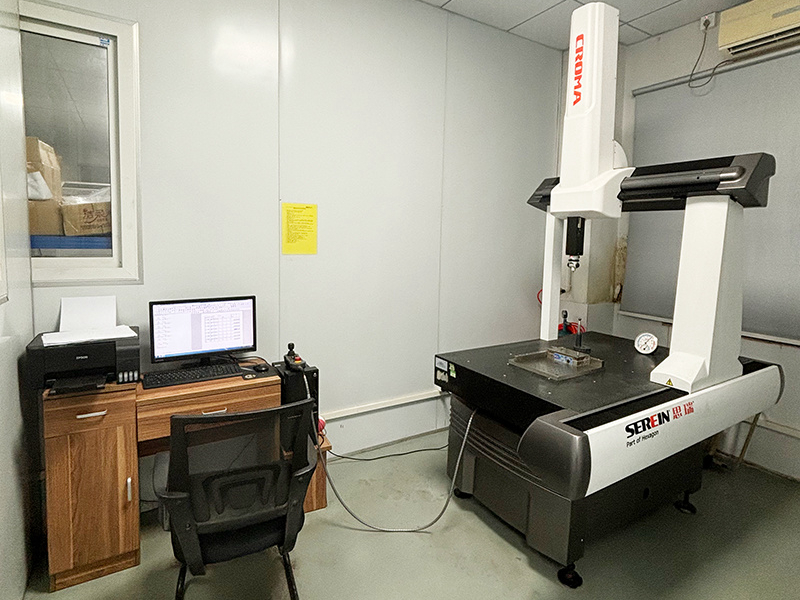
In mold and die manufacturing, quality control is essential. Precision inspection systems verify that tooling components meet strict engineering specifications.
Manufacturers commonly use advanced inspection technologies such as:
- Coordinate Measuring Machines (CMM)
- laser scanning systems
- digital surface measurement tools
These systems allow engineers to measure tooling components with micron-level accuracy and detect even the smallest dimensional deviations.
Through detailed inspection processes, manufacturers ensure that molds and dies will perform reliably during high-volume production.
Aspava Makina: Engineering Expertise in Mold & Die Manufacturing
High-performance tooling requires not only advanced machinery but also strong engineering knowledge and production experience.
Aspava Makina approaches mold and die manufacturing with an engineering-focused mindset. By combining modern CNC machining technologies with detailed tooling design expertise, the company develops high-quality molds and dies tailored for industrial production environments.
Aspava Makina’s capabilities include:
- precision mold and die manufacturing
- advanced CNC machining for tooling components
- custom fixture and workholding solutions
- engineering optimization for long tooling life
Through careful design analysis and precision machining, Aspava Makina supports manufacturers in achieving reliable production performance and consistent product quality.
Conclusion
Mold and die manufacturing forms the backbone of modern industrial production. These precision tools make it possible to produce complex metal and plastic components with high accuracy and repeatability.
By combining advanced machining technologies, high-performance materials, and expert engineering design, manufacturers can create tooling systems capable of supporting large-scale industrial production.
With its expertise in precision machining, tooling design, and advanced manufacturing solutions, Aspava Makina continues to contribute to the development of reliable mold and die technologies that support modern industry.