4
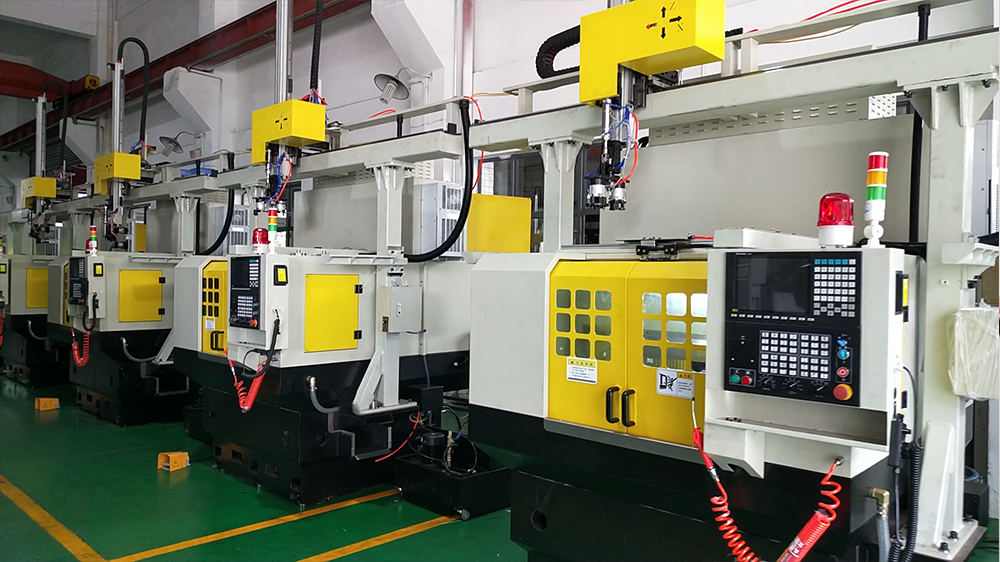
Manufacturing technology is evolving rapidly, and one of the most significant developments in recent years is the rise of automation in mold and die production. As tooling becomes more complex and production timelines become tighter, manufacturers are increasingly turning to automated systems to improve efficiency, precision, and production reliability.
But an important question emerges:
Why is automation becoming essential in modern tool and die manufacturing?
The answer lies in the increasing demand for precision, speed, and consistency in industrial production. Modern tooling environments require machining processes that operate continuously with minimal human intervention while maintaining extremely tight tolerances.
Automation technologies help manufacturers achieve this goal by integrating robotics, smart machining systems, and automated inspection solutions into the production workflow.
How Automation Transforms Mold and Die Production
In traditional machining environments, many processes rely heavily on manual operations. Operators must load heavy tooling components, move parts between machines, and monitor machining operations.
This raises an important practical question:
What happens when large mold components or heavy die plates must be moved frequently during production?
Manual handling not only slows down the process but also introduces potential safety risks and positioning errors. Automation systems solve this problem by integrating robotic solutions directly into the machining environment.
Robotic automation systems can perform tasks such as:
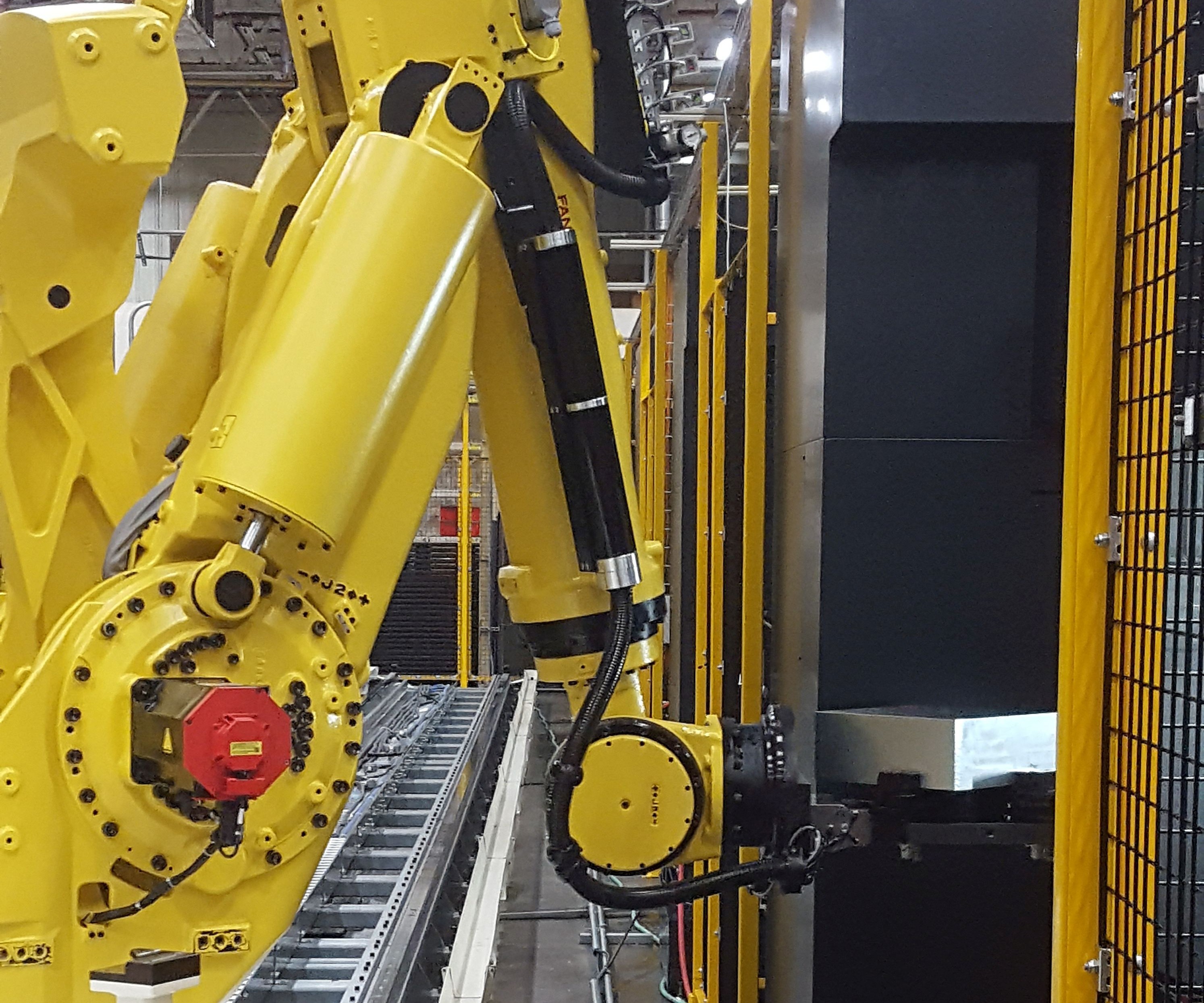
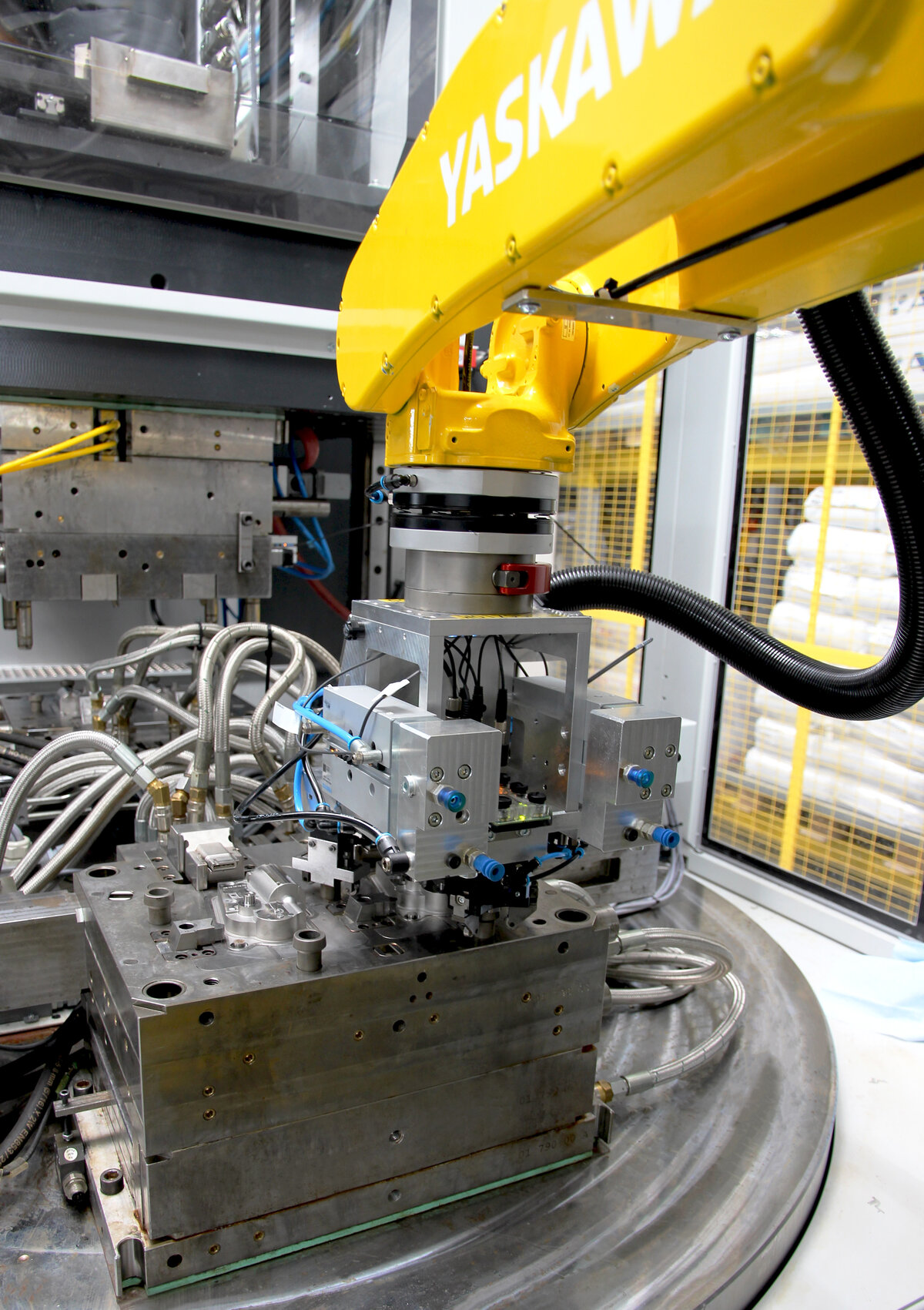
- Loading and unloading heavy die plates into CNC machines
- Transferring mold components between machining centers
- Managing tool changes and pallet systems
- Performing automated inspection and quality verification
By automating these repetitive tasks, manufacturers can ensure that production continues smoothly while reducing operator workload.
Why Automation Improves Manufacturing Efficiency
Another key question worth exploring is:
How does automation improve productivity in mold manufacturing?
Automation provides several critical advantages that directly impact production performance.
Continuous Production Capability
Automated machining cells can operate for extended periods, even during night shifts or unmanned production hours. This increases machine utilization and overall factory productivity.
Reduced Human Error
Robotic systems perform tasks with consistent accuracy, eliminating many of the positioning or handling errors that may occur during manual operations.
Improved Worker Safety
Handling large mold components or heavy die plates can be physically demanding and potentially dangerous. Automation reduces the need for manual lifting and improves workplace safety.
Faster Production Flow
Automated material handling allows mold components to move quickly between machining, inspection, and finishing operations, reducing production delays.
For companies producing molds and dies in high volumes, these benefits can dramatically improve operational efficiency.
Automated Inspection and Quality Control
Automation also plays a major role in modern quality control systems.
Consider this question:
How can manufacturers ensure that every mold component meets strict dimensional requirements?
Automated inspection systems can measure tooling components immediately after machining. Using laser scanners, coordinate measuring machines (CMM), or vision systems, manufacturers can verify part accuracy without removing components from the production workflow.
This integration allows companies to detect potential errors early and maintain consistent tooling quality.
Smart Manufacturing and Industry 4.0 Integration
Automation is also closely connected to the concept of Industry 4.0, where machines, software, and data systems communicate with each other to optimize production.
In smart manufacturing environments:
- CNC machines share data with robotic systems
- automated inspection equipment verifies dimensional accuracy
- production software tracks machining performance
- engineers monitor operations remotely
This connected production environment allows manufacturers to make faster decisions, improve machine efficiency, and maintain consistent product quality.
Aspava Makina: Supporting Automation in Advanced Tooling Production
Automation in tooling manufacturing requires not only robots and machines but also specialized workholding systems and fixture technologies that support automated machining environments.
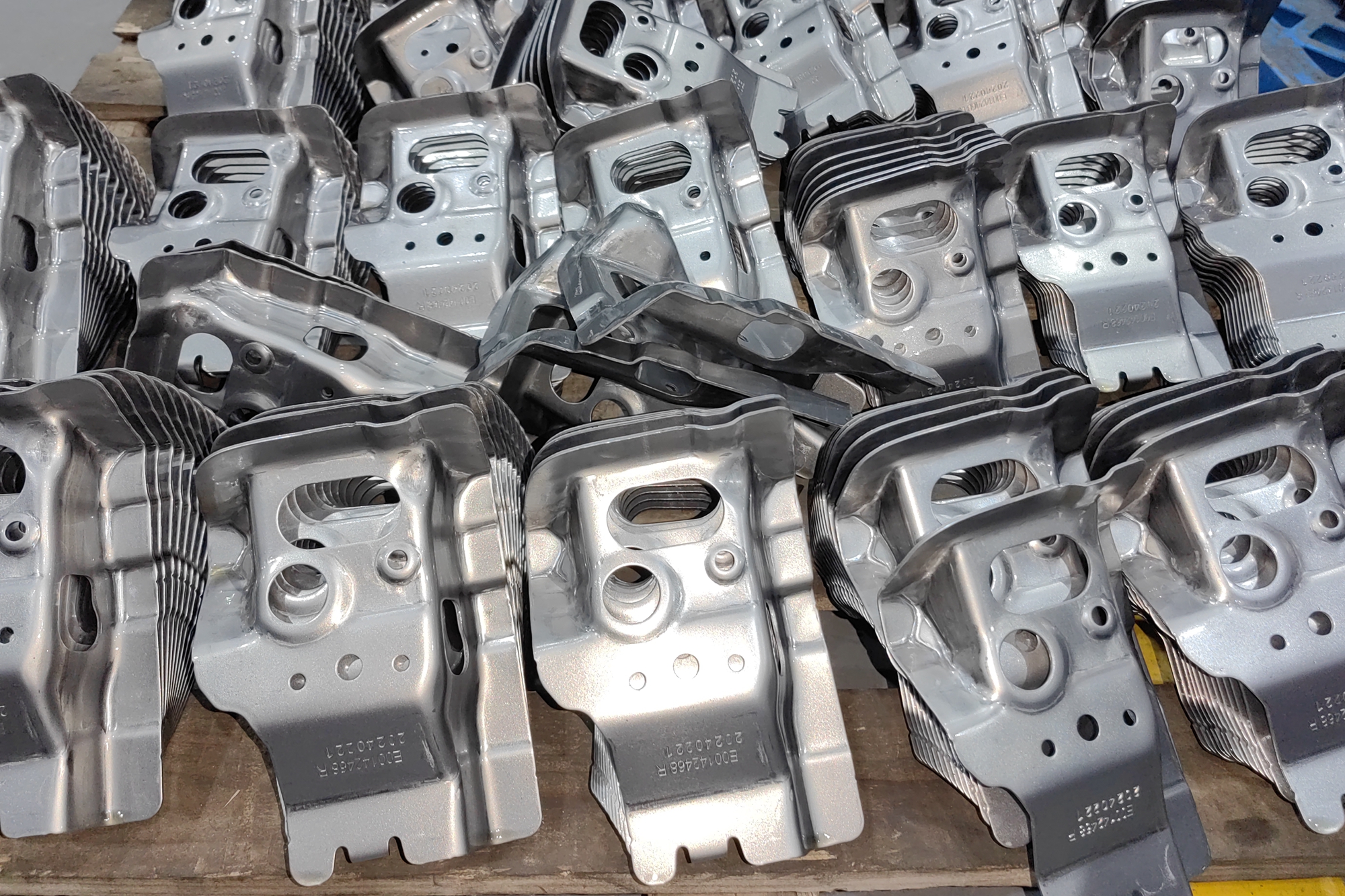
Aspava Makina contributes to modern automated production systems by developing precision-engineered tooling solutions designed specifically for CNC automation.
Their engineering expertise includes:

ASPAVA ENDÜSTRİYEL TEKNOLOJİ LTD ŞTİ
- custom workholding systems for automated CNC machining
- precision fixture technologies for mold and die production
- automation-compatible tooling components
- optimized manufacturing solutions for robotic machining cells
By designing fixtures and tooling systems that integrate seamlessly with automated CNC environments, Aspava Makina helps manufacturers achieve higher productivity while maintaining the precision required for mold and die manufacturing.
Conclusion
Automation is transforming the way molds and dies are manufactured. By integrating robotics, CNC machining, and automated inspection technologies, manufacturers can create production environments that are faster, safer, and more efficient.
These automated systems allow companies to maintain the high levels of precision required in modern tooling while significantly increasing production capacity.
With its engineering-driven approach and expertise in fixture design, workholding technologies, and precision tooling solutions, Aspava Makina supports the transition toward smart, automated manufacturing environments and continues to play an important role in the future of industrial production.