High-speed CNC machining has transformed modern manufacturing by enabling faster production, higher precision, and improved surface quality. Industries such as aerospace, automotive, defense, and advanced industrial machinery depend heavily on this technology to produce complex metal components with tight tolerances.
At ASPAVA Makina, high-speed CNC machining is implemented through a combination of advanced CNC machines, optimized cutting parameters, modern CAM programming, and deep knowledge of material science. This integrated approach allows the company to manufacture high-precision custom parts efficiently while maintaining strict quality standards.
This article explains the engineering principles behind high-speed machining and how it significantly improves production performance.
Precision High Speed CNC Machining for Custom Manufacturing
High-speed CNC machining refers to machining operations where spindle speeds, feed rates, and cutting speeds are significantly higher than traditional machining methods. The goal is to remove material quickly while maintaining stability and precision.
Modern CNC machining centers equipped with high-speed spindles, rigid structures, and advanced CAM software enable manufacturers to produce complex geometries with exceptional accuracy.
Key advantages include:
- Reduced machining time
- Higher dimensional accuracy
- Improved surface finish
- Lower thermal deformation
- Increased productivity
These benefits make high-speed machining particularly valuable for custom manufacturing, where each component may have unique geometries and tight engineering tolerances.


4
In custom manufacturing environments, production flexibility is critical. High-speed machining allows engineers to quickly adapt machining strategies for different materials and part geometries without sacrificing precision.
At ASPAVA Makina, engineers carefully analyze:
- tool geometry
- chip load
- material properties
- toolpath strategy
- machine rigidity
This ensures stable machining conditions even for complex custom components.
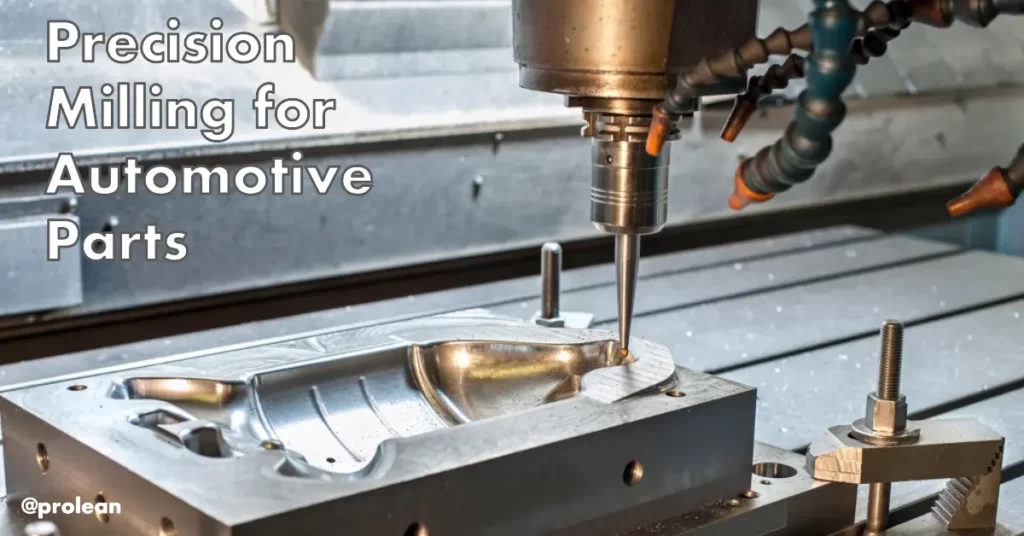
Advanced High Speed Machining for Aerospace and Automotive Parts
Aerospace and automotive industries require components with extremely tight tolerances, high strength materials, and complex geometries. These sectors benefit greatly from high-speed CNC machining.
Aircraft structures, turbine components, engine housings, and automotive performance parts often require advanced machining strategies.
4
Aerospace Applications
Aerospace components often use lightweight alloys such as:
- Aluminum alloys (7075, 6061)
- Titanium alloys
- High-temperature superalloys
These materials require precise control of cutting parameters due to their mechanical properties.
For example:
Titanium machining challenges
- low thermal conductivity
- high cutting temperatures
- tool wear
To overcome these challenges, ASPAVA Makina engineers optimize:
- cutting speeds
- coolant strategies
- tool coatings
- chip evacuation
Automotive Applications
Automotive manufacturing demands high productivity and consistent quality.
Typical automotive CNC parts include:
- engine blocks
- transmission components
- suspension parts
- aluminum housings
- precision brackets
High-speed machining significantly reduces cycle times for these components while maintaining dimensional accuracy.
How High Speed CNC Machining Improves Production Efficiency
Production efficiency in machining is influenced by several key parameters:
- material removal rate
- machining stability
- tool life
- machine utilization
High-speed machining improves efficiency primarily through higher material removal rates and optimized cutting mechanics.
Higher Material Removal Rate (MRR)
Material removal rate is calculated as:
MRR = Width of cut × Depth of cut × Feed rate
Increasing spindle speed and feed rate allows more material to be removed in less time.
Reduced Machining Time
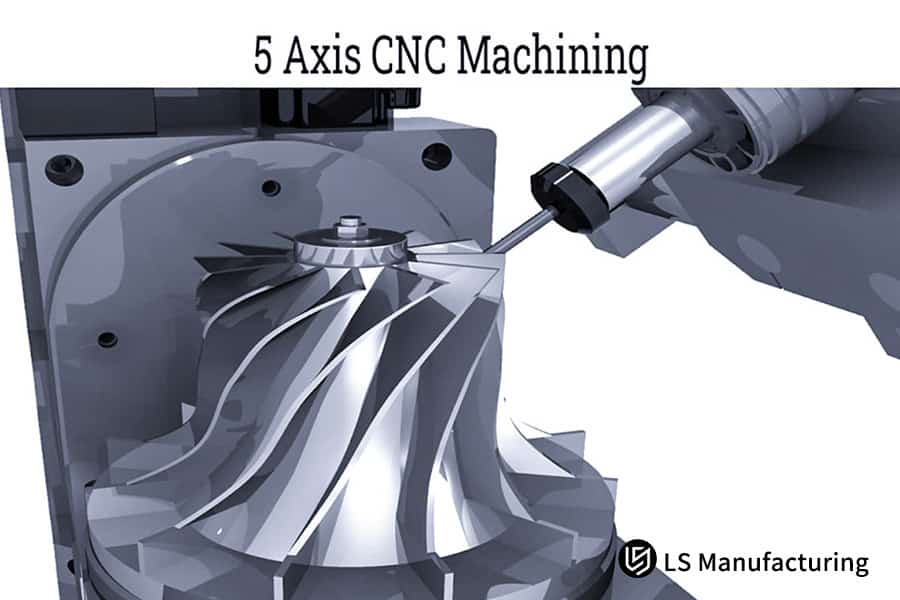
High-speed machining often allows components to be produced in fewer setups, particularly when combined with 5-axis machining.
This leads to:
- lower setup time
- reduced alignment errors
- improved productivity
Improved Surface Quality
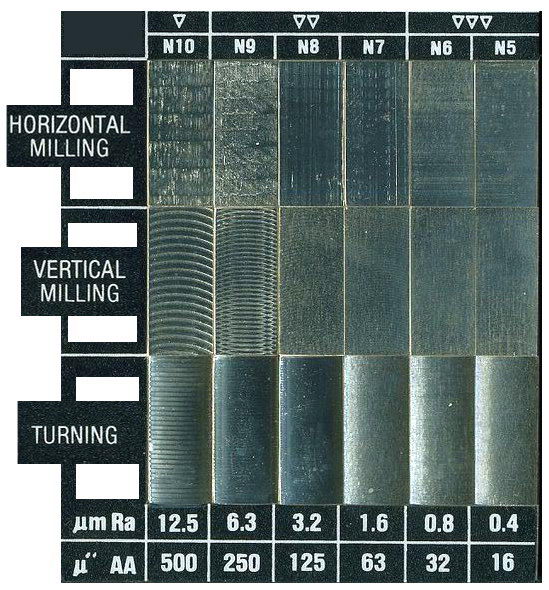
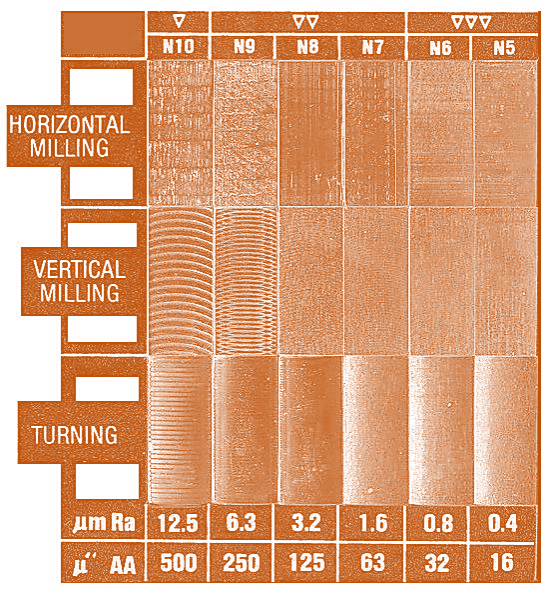
Higher spindle speeds produce smoother cutting action, resulting in improved surface finish.

4
Better surface finish often reduces the need for secondary operations such as grinding or polishing.
Tool Life Optimization
Although cutting speeds are higher, optimized chip loads and advanced toolpath strategies reduce cutting forces. This often leads to longer tool life compared to conventional machining.
ASPAVA Makina achieves this through:
- adaptive machining strategies
- high-performance carbide tools
- optimized CAM programming
- vibration control
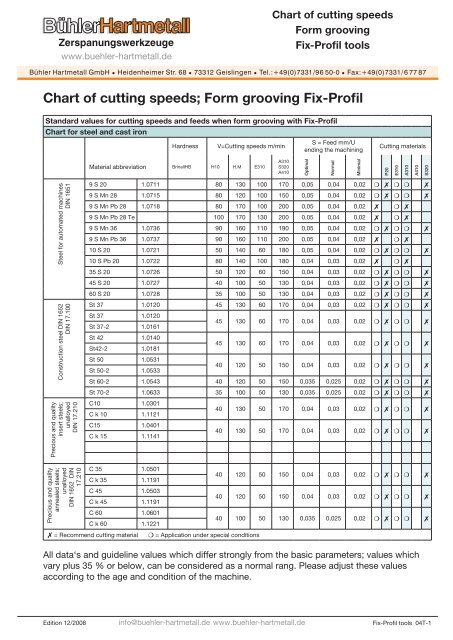
High Speed Machining vs Conventional CNC Machining
Understanding the differences between conventional machining and high-speed machining helps explain why modern manufacturing is shifting toward high-speed technologies.


4
| Parameter | Conventional CNC Machining | High Speed CNC Machining |
|---|---|---|
| Spindle Speed | Low to moderate | Very high |
| Feed Rate | Moderate | High |
| Chip Thickness | Larger | Smaller |
| Surface Finish | Moderate | Excellent |
| Machining Time | Longer | Shorter |
| Heat Generation | Higher | Lower (due to chip evacuation) |
Cutting Mechanics Differences
In conventional machining, larger chips are removed with higher cutting forces. This often leads to increased tool wear and vibration.
High-speed machining, however, produces thinner chips at higher speeds, reducing cutting forces and stabilizing the machining process.
Machine Requirements
High-speed machining requires advanced machines with:
- high spindle speeds (20,000+ RPM)
- rigid machine structure
- advanced CNC controllers
- high-performance tool holders
ASPAVA Makina integrates these technologies to ensure reliable machining performance.
Controlling Tool Vibration and Machining Stability
One of the most important challenges in high-speed machining is chatter vibration.
Chatter occurs when cutting forces excite the natural frequency of the machine-tool system.


4
Effects of chatter include:
- poor surface finish
- tool damage
- dimensional inaccuracies
ASPAVA Makina reduces vibration through:
- rigid tool holders
- optimized tool overhang
- advanced CAM toolpaths
- stable cutting parameters
Maintaining stable machining conditions is essential for high-precision production.
CAM Programming and Digital Manufacturing
Modern CNC machining heavily depends on advanced CAM software.
CAM systems generate optimized toolpaths that control tool movement during machining.
Common strategies include:
- adaptive roughing
- trochoidal milling
- rest machining
- high-speed finishing
These strategies reduce cutting forces and improve machining efficiency.
Digital manufacturing technologies also allow engineers to simulate machining operations before production begins, reducing the risk of errors.
ASPAVA Makina’s Engineering Approach to Precision Machining
ASPAVA Makina combines modern manufacturing technologies with engineering expertise to deliver high-quality precision parts.
Key capabilities include:
- high-speed CNC machining
- complex multi-axis machining
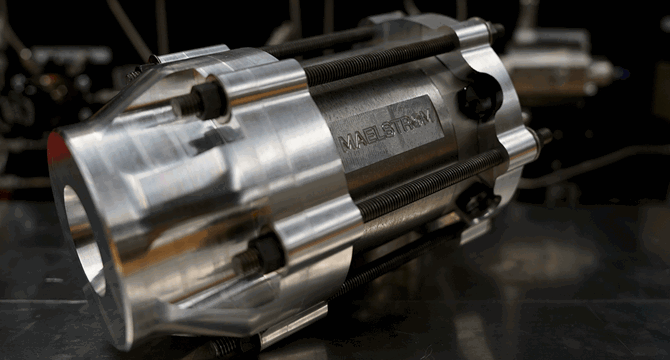
- custom metal part manufacturing
- advanced CAM programming
- strict quality inspection
Each production process is carefully controlled to ensure:
- dimensional accuracy
- consistent quality
- reliable delivery schedules
This engineering-focused approach allows ASPAVA Makina to support industries that demand high precision and reliability.
Conclusion
High-speed CNC machining represents the future of precision manufacturing. By combining advanced machine technology, optimized cutting parameters, and modern CAM strategies, manufacturers can produce high-quality components faster and more efficiently.
ASPAVA Makina demonstrates strong expertise in this field by implementing advanced machining technologies and engineering knowledge in every production process.
Through precision machining, process optimization, and continuous innovation, ASPAVA Makina continues to deliver reliable solutions for custom manufacturing in demanding industries.