Modern manufacturing is undergoing one of the most significant transformations in its history. Increasing global competition, higher customer expectations, and rapid technological progress are forcing manufacturers to rethink how they produce parts, manage quality, and maintain efficiency.
Factories today face a common challenge: how to maintain consistent quality while increasing production speed and reducing operational errors.
In high-volume manufacturing environments, even small variations in production processes can lead to significant quality issues, wasted materials, and costly downtime. As a result, manufacturers around the world are increasingly turning to automation, intelligent workholding systems, and robotic integration to ensure stable and repeatable production.
Companies that invest in smart manufacturing technologies are not only improving productivity but also building more resilient and sustainable production systems. Among the most important components of this transformation are advanced fixture systems, precision workholding solutions, and robotic automation technologies.
ASPAVA develops innovative manufacturing solutions that support these modern production requirements, helping companies achieve higher precision, improved efficiency, and consistent manufacturing quality.
The Challenge of Consistent Quality in High-Volume Manufacturing
Maintaining consistent quality is one of the most difficult challenges in modern manufacturing. In traditional production environments, the quality of a machined part often depends heavily on the experience and attention of the machine operator.
While skilled operators play a crucial role in manufacturing, human involvement also introduces variability. Fatigue, manual errors, incorrect setup procedures, or inconsistent clamping can all affect the final quality of a product.
In industries such as automotive, aerospace, medical device manufacturing, and precision engineering, even minor deviations in part geometry or surface quality can lead to serious problems.
Manufacturers must therefore find ways to reduce variability and create stable production processes that deliver consistent results regardless of operator influence.
This is where automation, precision workholding, and intelligent fixture design become essential.
By combining advanced engineering with automated systems, manufacturers can significantly reduce human errors and ensure that every part produced meets the same quality standards.
Poka-Yoke: Error Proofing in Modern Manufacturing
One of the most influential concepts in modern manufacturing is Poka-Yoke, a Japanese term that means “mistake-proofing.”
Originally developed within the Toyota Production System, Poka-Yoke focuses on designing processes and equipment in such a way that errors either cannot occur or are immediately detected before they affect product quality.
Rather than relying solely on operator vigilance, Poka-Yoke systems introduce mechanical, visual, or automated safeguards that prevent mistakes from happening.
Examples of Poka-Yoke systems in manufacturing include:
- Fixtures that only allow parts to be positioned in the correct orientation
- Sensors that detect missing components
- automated systems that stop machines if abnormal conditions are detected
- clamping systems that ensure correct positioning every time
In CNC machining environments, precision fixture systems play a critical role in implementing Poka-Yoke principles.
Well-designed fixtures ensure that parts can only be mounted in the correct position, preventing incorrect setups that might lead to machining errors.
ASPAVA integrates Poka-Yoke principles into its fixture and workholding solutions to help manufacturers maintain consistent production quality.
The Role of Precision Fixtures in Stable Production
Fixtures are one of the most important tools used in manufacturing to ensure repeatability and stability.
A precision fixture system is designed to hold a workpiece securely in a fixed position during machining operations. However, modern fixture systems must do more than simply hold a part in place.
They must also:
- ensure precise positioning
- maintain stability during cutting operations
- allow efficient loading and unloading
- support automated production systems
In high-performance manufacturing environments, fixture systems must also be compatible with robotic automation and CNC integration.
ASPAVA designs advanced fixture solutions that enable manufacturers to achieve reliable and repeatable production while minimizing setup time and human intervention.
Robotic Automation in CNC Manufacturing
Robotic automation has become one of the most powerful tools for improving productivity in modern factories.
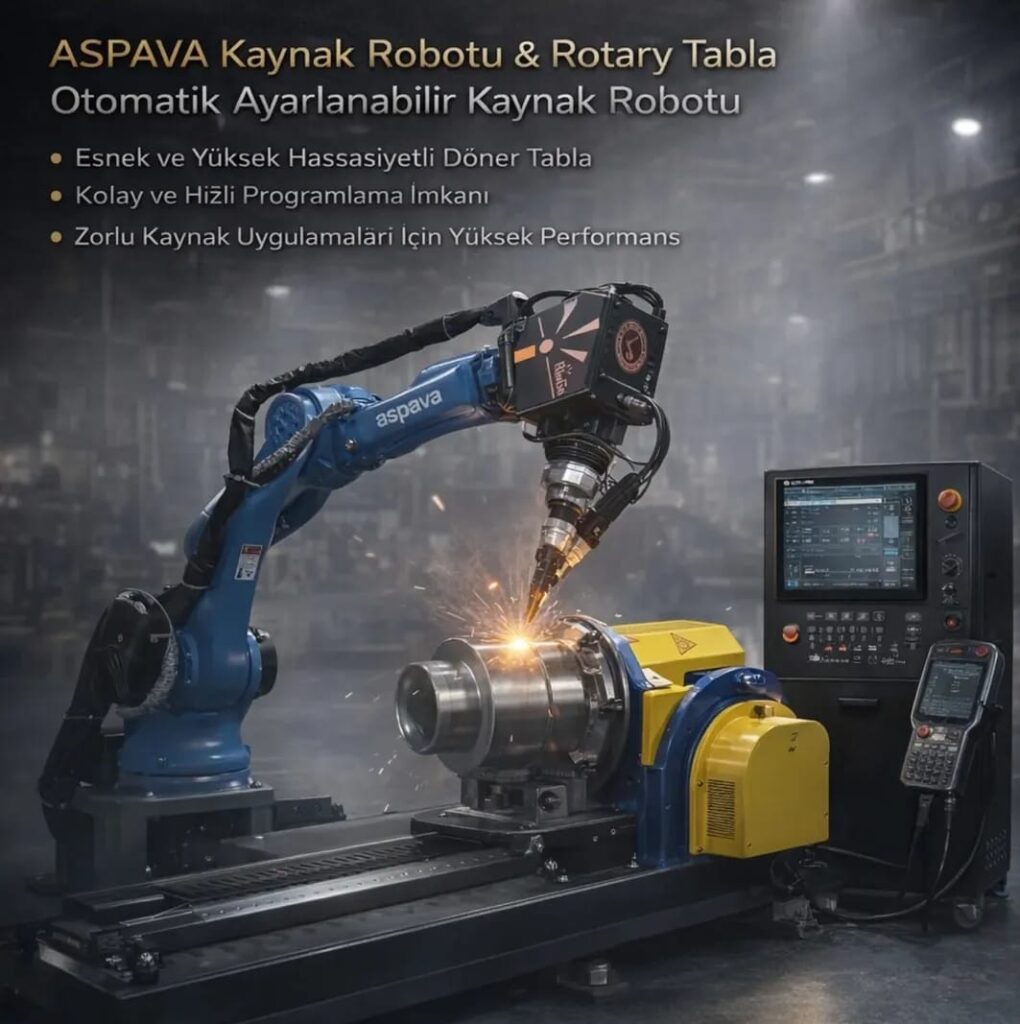
Industrial robots can perform repetitive tasks with exceptional precision and consistency. When integrated with CNC machines, robotic systems can automate many aspects of the machining process, including:
- loading and unloading workpieces
- transferring parts between machines
- handling finished components
- performing automated quality inspections
Robotic automation offers several advantages for manufacturers.
First, robots can operate continuously without fatigue, enabling 24-hour production cycles.
Second, automated systems reduce the risk of human error, improving production consistency.
Third, robotic automation increases overall efficiency by reducing machine idle time.
ASPAVA supports robotic automation by developing fixture systems and workholding solutions optimized for automated production environments.
These solutions enable seamless integration between CNC machines, robots, and production lines.
Smart Fixtures for Automated Production
Traditional fixtures were designed primarily for manual operations. However, modern automated factories require smart fixtures that support robotic integration and intelligent production systems.
Smart fixture systems may include features such as:
- automated clamping mechanisms
- integrated sensors for position verification
- modular fixture configurations
- compatibility with robotic loading systems
These advanced systems help manufacturers create flexible production environments that can quickly adapt to new products and production requirements.
ASPAVA develops fixture systems that combine precision engineering, modular design, and automation compatibility, enabling manufacturers to implement advanced production strategies.
Lights-Out Manufacturing: The Future of Production
One of the most exciting developments in modern manufacturing is the concept of lights-out manufacturing.
Lights-out manufacturing refers to production systems that operate with minimal or no human intervention. Machines and robots perform the entire manufacturing process automatically, allowing factories to continue operating even when workers are not present.
This approach offers several benefits:
- increased production capacity
- reduced labor costs
- improved process consistency
- higher machine utilization
However, successful lights-out manufacturing requires highly reliable equipment and robust production systems.
Workholding solutions, fixtures, and automation systems must function flawlessly without constant operator supervision.
ASPAVA supports lights-out production by providing reliable fixture systems and automated manufacturing solutions designed for continuous operation.
Reducing Operator Errors Through Automation
Human operators are essential in manufacturing, but manual processes inevitably introduce variability.
Automation helps reduce this variability by standardizing critical production steps.
By integrating robotic systems, precision fixtures, and intelligent process monitoring, manufacturers can significantly reduce operator errors.
Automation solutions may include:
- robotic workpiece loading
- automated clamping systems
- sensor-based quality verification
- real-time process monitoring
These technologies ensure that every production cycle follows the same parameters, resulting in consistent product quality.
ASPAVA develops solutions that combine precision workholding and automation technologies, enabling manufacturers to create stable and reliable production systems.
Sustainable Manufacturing Through Process Optimization
Sustainability has become an important consideration for modern manufacturing companies.
Efficient production systems reduce material waste, energy consumption, and operational costs.
Automation and intelligent production systems contribute to sustainability by improving process efficiency and minimizing production errors.
For example:
- stable clamping reduces scrap rates
- optimized machining processes reduce tool wear
- automated systems reduce energy waste caused by idle machines
ASPAVA supports sustainable manufacturing by developing efficient fixture systems and automation solutions that optimize production processes.
The Future of Smart Manufacturing
The manufacturing industry is entering a new era defined by automation, digitalization, and intelligent production systems.
Technologies such as artificial intelligence, advanced robotics, and smart sensors will continue to transform how factories operate.
In the future, manufacturing systems will become increasingly interconnected, allowing machines, robots, and production management software to communicate seamlessly.
These developments will enable manufacturers to achieve unprecedented levels of efficiency, flexibility, and precision.
Companies that invest in advanced manufacturing technologies and automation solutions will be better positioned to compete in the global marketplace.
ASPAVA continues to develop innovative solutions that support the transition toward smart manufacturing and automated production environments.