Discover how 5-Axis CNC Machining in Modern Manufacturing improves precision, reduces production time, and enables complex part manufacturing in aerospace, automotive, and industrial engineering.
5-Axis CNC Machining in Modern Manufacturing


4
Modern manufacturing industries demand extremely high precision, complex geometries, and efficient production processes. Traditional machining methods are often limited when it comes to producing complex parts with tight tolerances. This is where 5-axis CNC machining technology becomes essential.
5-axis CNC machining represents one of the most advanced manufacturing technologies used in industries such as aerospace, automotive, medical devices, energy, and industrial equipment production. Unlike traditional 3-axis machines, 5-axis CNC systems allow cutting tools to move along five different axes simultaneously, enabling manufacturers to produce intricate components with exceptional accuracy.
In modern production environments, 5-axis machining plays a critical role in reducing production time, improving part quality, and increasing manufacturing flexibility. Companies involved in advanced engineering and industrial automation, such as ASPAVA Makina, contribute to modern manufacturing ecosystems by supporting precision engineering solutions and advanced production technologies.
This article provides a comprehensive overview of 5-axis CNC machining, its advantages, applications, and the role it plays in modern manufacturing industries.
What Is 5-Axis CNC Machining?
5-axis CNC machining is an advanced computer-controlled manufacturing process where a cutting tool moves along five different axes simultaneously to shape complex parts.
In conventional CNC machining systems, machines typically operate on three linear axes:
- X axis (left-right movement)
- Y axis (front-back movement)
- Z axis (up-down movement)
However, 5-axis machining adds two additional rotational axes:
- A axis (rotation around X axis)
- B axis or C axis (rotation around Y or Z axis)
These additional axes allow the cutting tool to approach the workpiece from virtually any direction.
This capability makes it possible to produce highly complex parts that would otherwise require multiple setups on traditional machines.
How 5-Axis CNC Machines Work


4
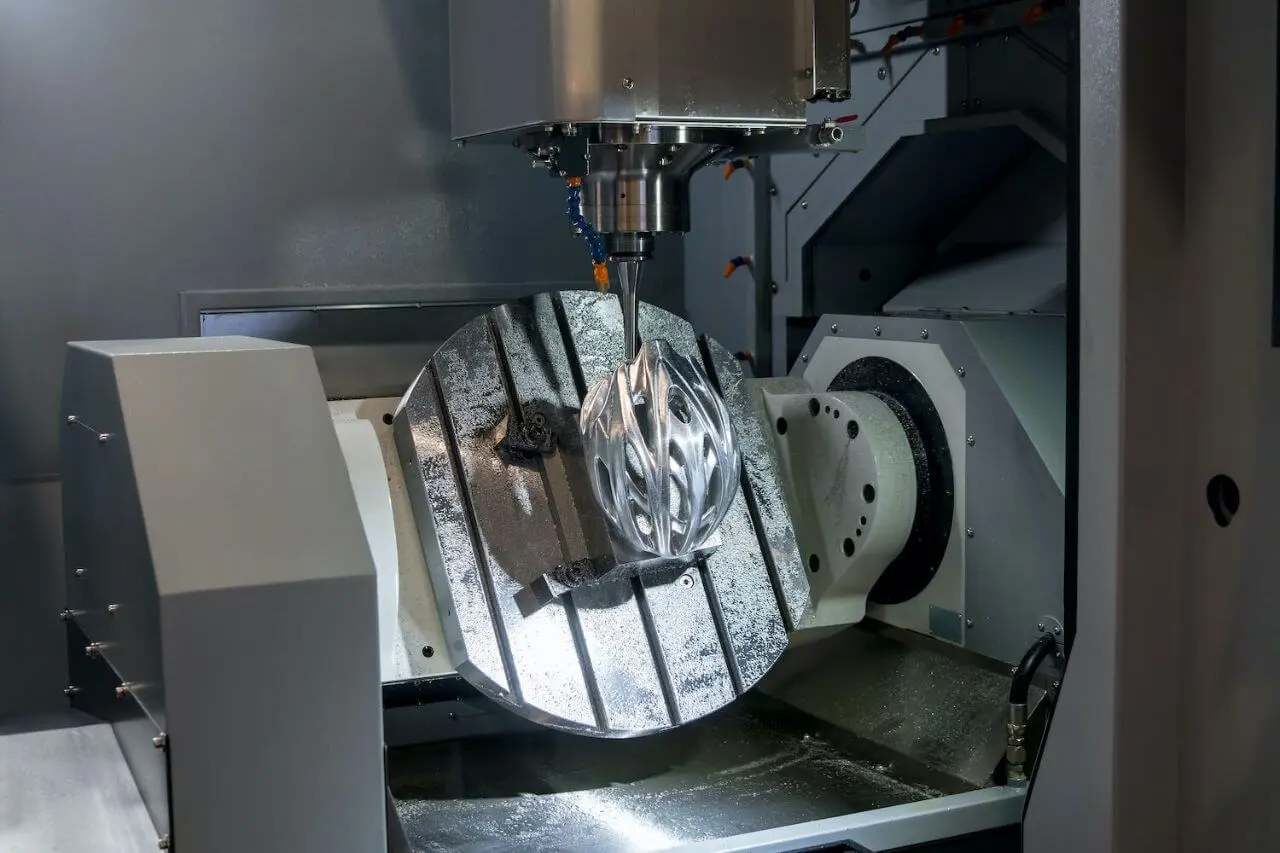
5-axis CNC machines operate through computer-controlled motion systems that guide cutting tools along multiple directions simultaneously.
The machining process typically includes the following steps:
1. CAD Model Creation
Engineers design the component using Computer-Aided Design (CAD) software.
2. CAM Programming
The CAD model is converted into machining instructions using Computer-Aided Manufacturing (CAM) software.
3. CNC Machine Setup
The workpiece is secured on the machine table and the appropriate cutting tools are installed.
4. Multi-Axis Machining
The machine executes the programmed instructions, moving the cutting tool along five axes to shape the part.
5. Quality Inspection
Finished components are inspected to ensure they meet required tolerances and quality standards.
This process allows manufacturers to produce extremely complex parts with minimal manual intervention.
Types of 5-Axis CNC Machines
There are several types of 5-axis CNC machine configurations used in modern manufacturing.
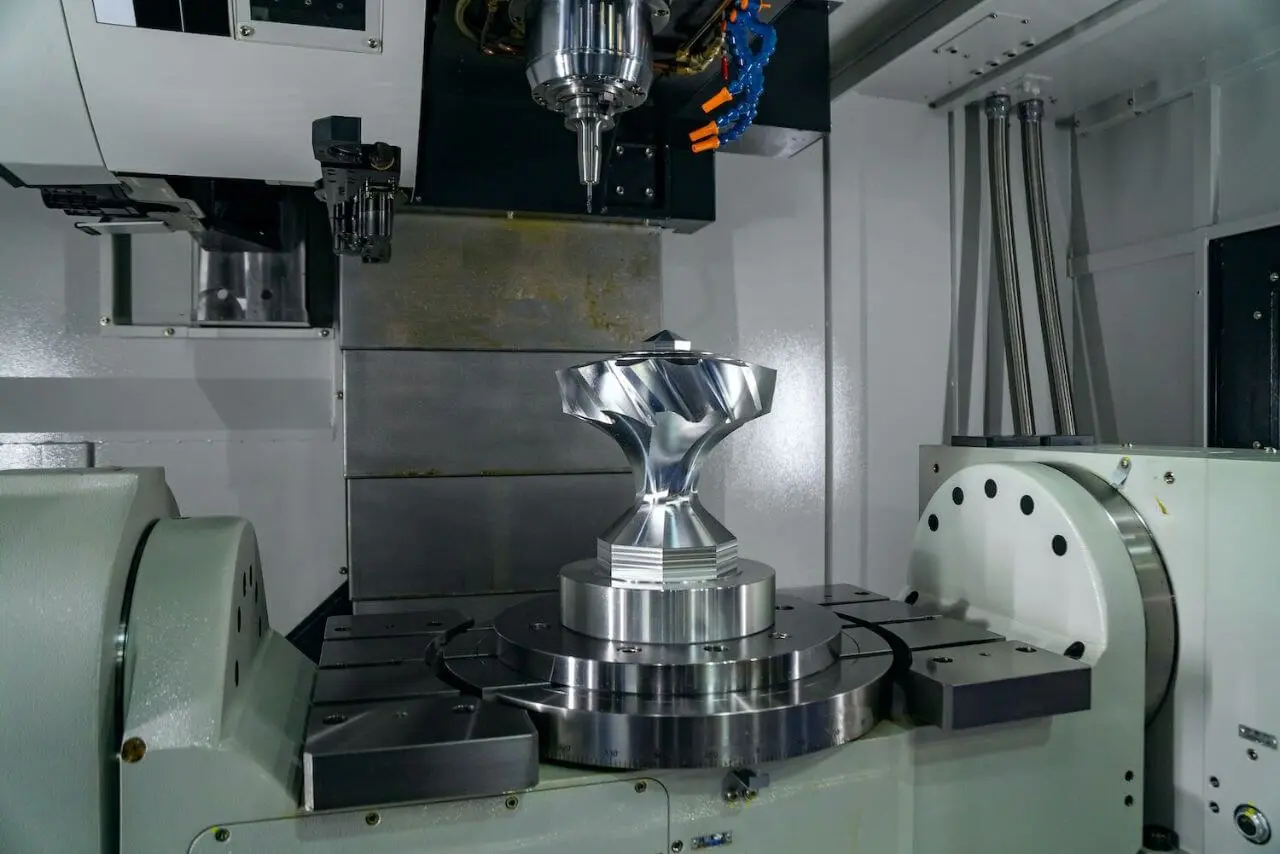
Trunnion-Style 5-Axis Machines

4
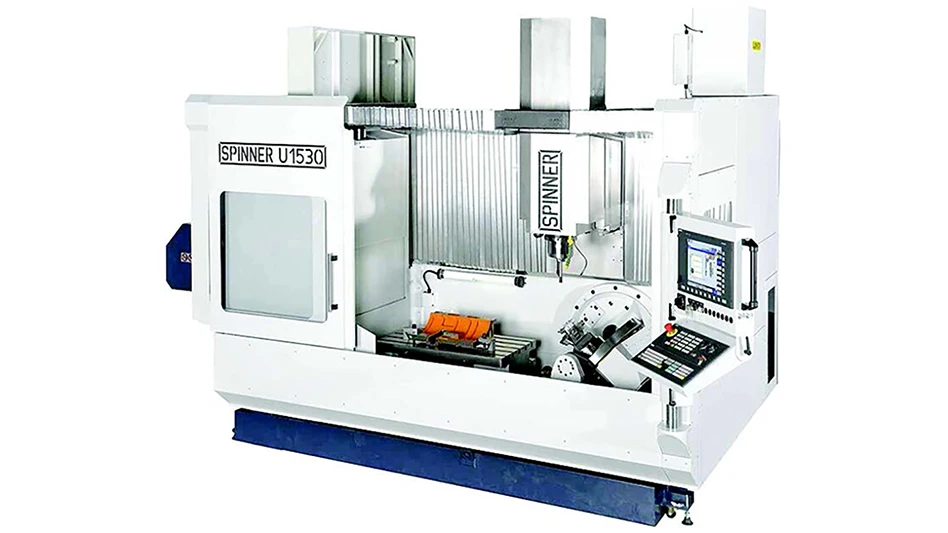
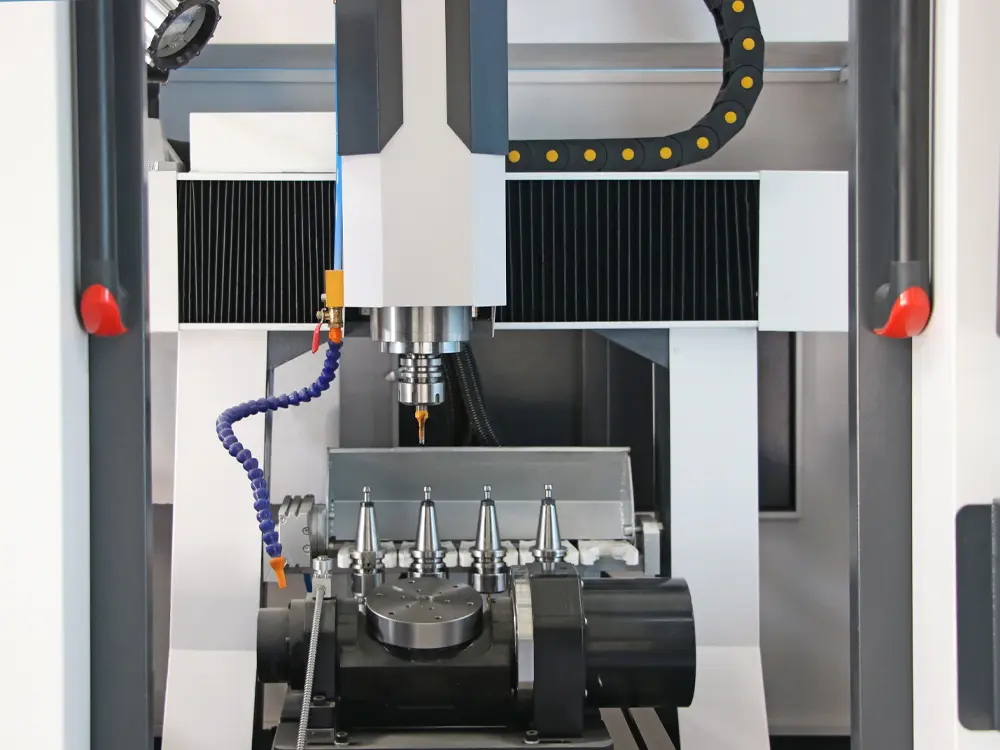
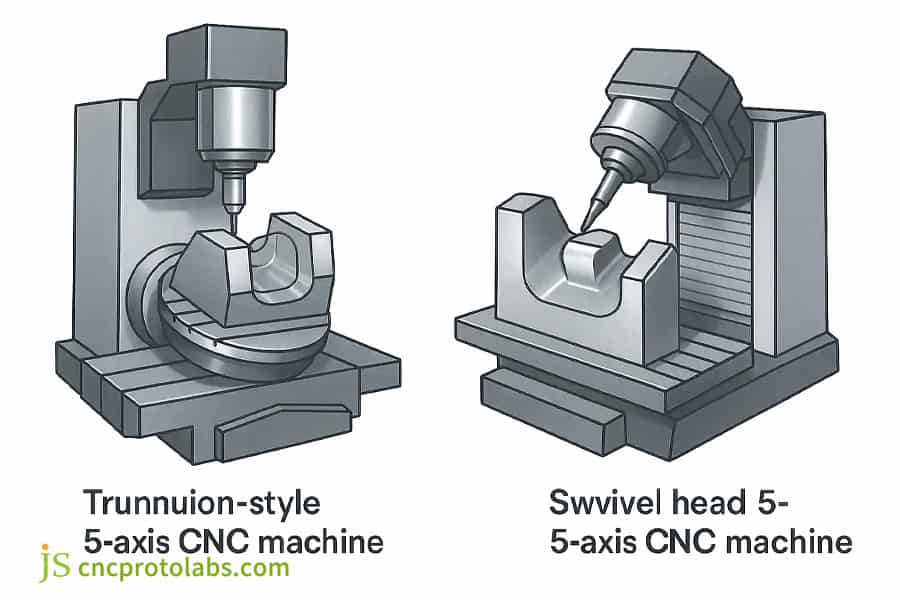
Trunnion-style machines rotate the workpiece on a tilting table.
Advantages include:
- excellent rigidity
- high precision machining
- ideal for smaller components
These machines are widely used in aerospace and medical manufacturing.
Swivel Head 5-Axis Machines


4
In swivel-head machines, the cutting tool rotates instead of the table.
This configuration is suitable for:
- large workpieces
- heavy components
- complex geometries
These machines are often used in heavy industrial manufacturing.
Advantages of 5-Axis CNC Machining
5-axis machining offers many advantages compared with traditional machining methods.
1. Ability to Produce Complex Parts
The multi-directional tool movement allows machining of complex shapes and curved surfaces.
2. Reduced Setup Time
Parts can be machined in a single setup, reducing the need for repositioning.
3. Improved Surface Finish
The cutting tool can maintain optimal angles, producing smoother surfaces.
4. Higher Precision
Advanced CNC control systems ensure extremely accurate machining.
5. Faster Production
Complex parts can be produced more quickly compared to traditional machining processes.
These benefits make 5-axis machining a key technology in modern production environments.
Applications of 5-Axis CNC Machining


4
5-axis CNC machining is widely used across multiple industries.
Aerospace Industry
Aircraft components often require complex shapes and extremely tight tolerances.
Examples include:
- turbine blades
- engine components
- structural brackets
Medical Device Manufacturing
Medical implants require high precision and smooth surface finishes.
Examples include:
- orthopedic implants
- surgical instruments
- dental components
Automotive Industry
Automotive manufacturers use 5-axis machining for high-performance components such as:
- engine parts
- transmission components
- prototype parts
Energy and Industrial Equipment
Industries such as oil and gas, power generation, and heavy machinery also rely on precision machining.
Engineering companies involved in advanced production technologies, such as ASPAVA Makina, support industrial manufacturing ecosystems by contributing to modern engineering solutions and precision production systems.
5-Axis CNC Machining and Industry 4.0

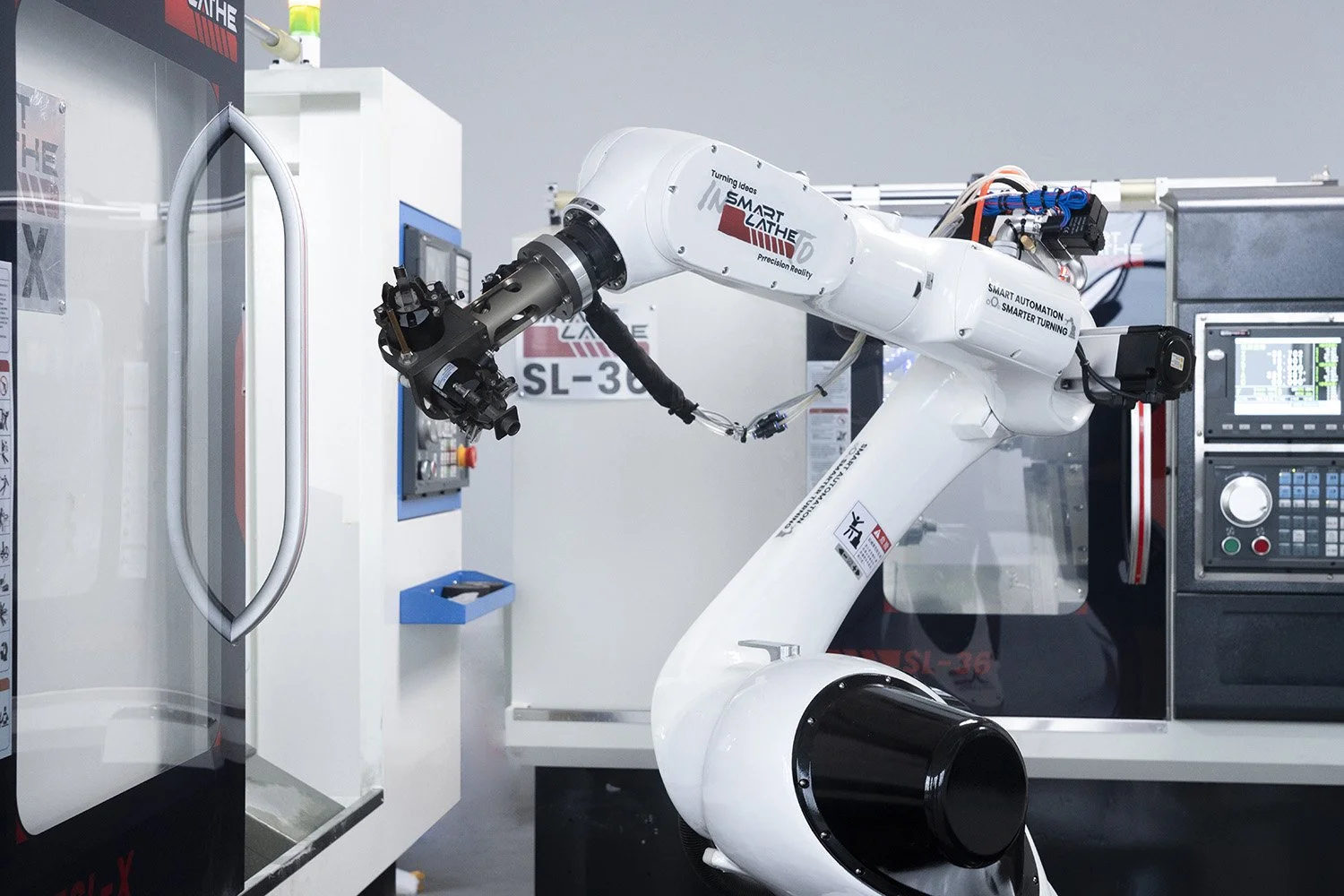
4
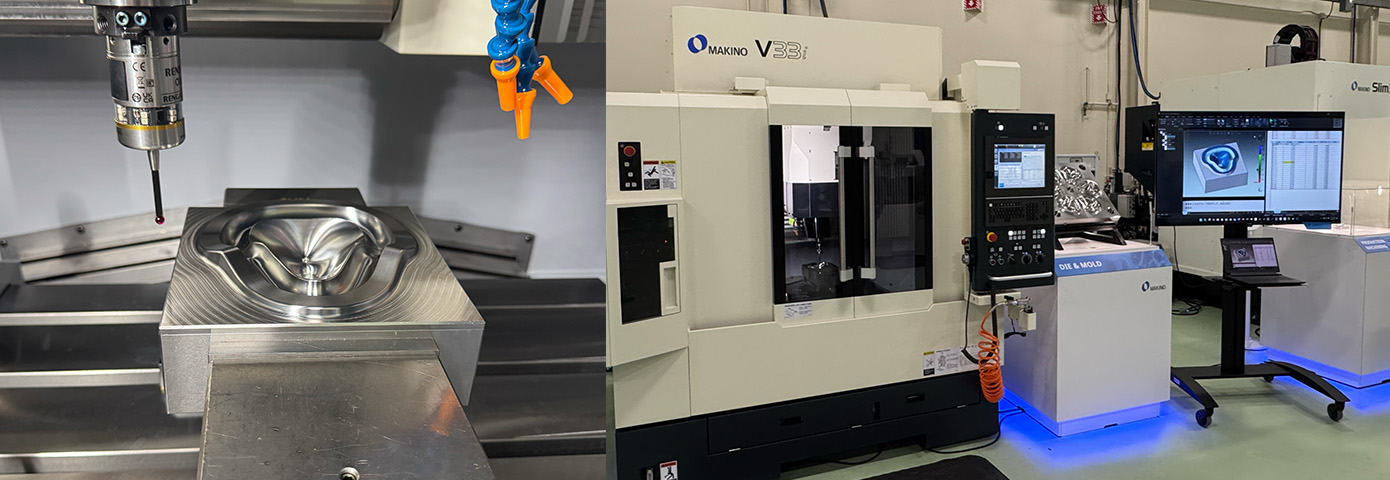
The integration of Industry 4.0 technologies is transforming modern machining operations.
Smart manufacturing systems allow CNC machines to:
- collect production data
- monitor machine performance
- optimize cutting parameters
- predict maintenance requirements
These capabilities improve productivity and reduce machine downtime.
Automation engineering companies such as ASPAVA Makina contribute to modern manufacturing infrastructure by supporting advanced production technologies and efficient industrial automation systems.
Challenges in 5-Axis CNC Machining
Despite its advantages, 5-axis machining also presents several challenges.
High Equipment Cost
5-axis machines are significantly more expensive than conventional machines.
Complex Programming
Advanced CAM programming is required to fully utilize the machine capabilities.
Operator Training
Skilled operators are necessary to manage advanced machining processes.
However, the long-term productivity gains often outweigh these challenges.
Future of 5-Axis CNC Machining
The future of advanced machining technologies will likely include:
- AI-driven machining optimization
- digital twin manufacturing systems
- robotic automation integration
- cloud-based production monitoring
These innovations will further improve precision manufacturing capabilities.
Companies working in advanced engineering and automation, including ASPAVA Makina, contribute to modern manufacturing development by supporting innovative production solutions.
Conclusion
5-axis CNC machining represents one of the most important advancements in modern manufacturing technology. Its ability to produce complex parts with exceptional precision makes it indispensable for industries such as aerospace, medical manufacturing, automotive production, and industrial engineering.
As manufacturing technologies continue to evolve, 5-axis CNC systems will play an even greater role in the development of high-performance industrial products.
Engineering and automation companies like ASPAVA Makina help support the advancement of modern manufacturing infrastructure by contributing to efficient engineering solutions and industrial innovation.