
aspava endüstriyel teknoloji

4
Injection molding is one of the most efficient and scalable manufacturing processes used in modern industry to produce plastic components. Many products that people use daily—automotive interior parts, electronic housings, medical device components, packaging products, and household appliances—are manufactured using precision injection molds.
But an important question arises:
How can manufacturers produce thousands or even millions of identical plastic parts with perfect consistency?
The answer lies in injection mold manufacturing, a highly specialized engineering discipline where precision tooling determines the quality, accuracy, and efficiency of the entire production process.
Injection molds are not simple tools. They are complex mechanical systems designed to control plastic material flow, cooling, and part ejection during high-pressure production cycles.
How Does the Injection Molding Process Work?
To better understand mold manufacturing, it helps to explore the process itself.
In injection molding, plastic material—usually in pellet form—is heated until it becomes molten. This molten plastic is then injected under high pressure into a precisely machined mold cavity.
Once inside the mold, the material cools and solidifies into the desired shape.
But this leads to a critical engineering question:
What ensures that the molten plastic fills the mold correctly and forms a perfect part every time?
The answer is precise mold design and manufacturing. Every channel, surface, and component within the mold must be carefully engineered to guide the plastic material smoothly during the injection process.
What Are the Key Components of an Injection Mold?
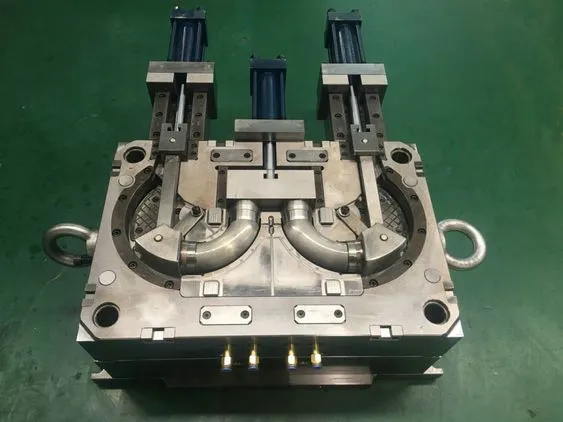
An injection mold consists of multiple components working together to produce high-quality plastic parts.
Mold Cavities
The mold cavity defines the external shape of the final plastic component. This surface must be machined with extremely high precision to ensure the correct part geometry and surface quality.
Core Inserts
Core inserts form the internal features of the plastic part. They may create holes, ribs, or internal structures within the product.
Because these components experience high pressure and temperature during production, they must be made from durable tool steels.
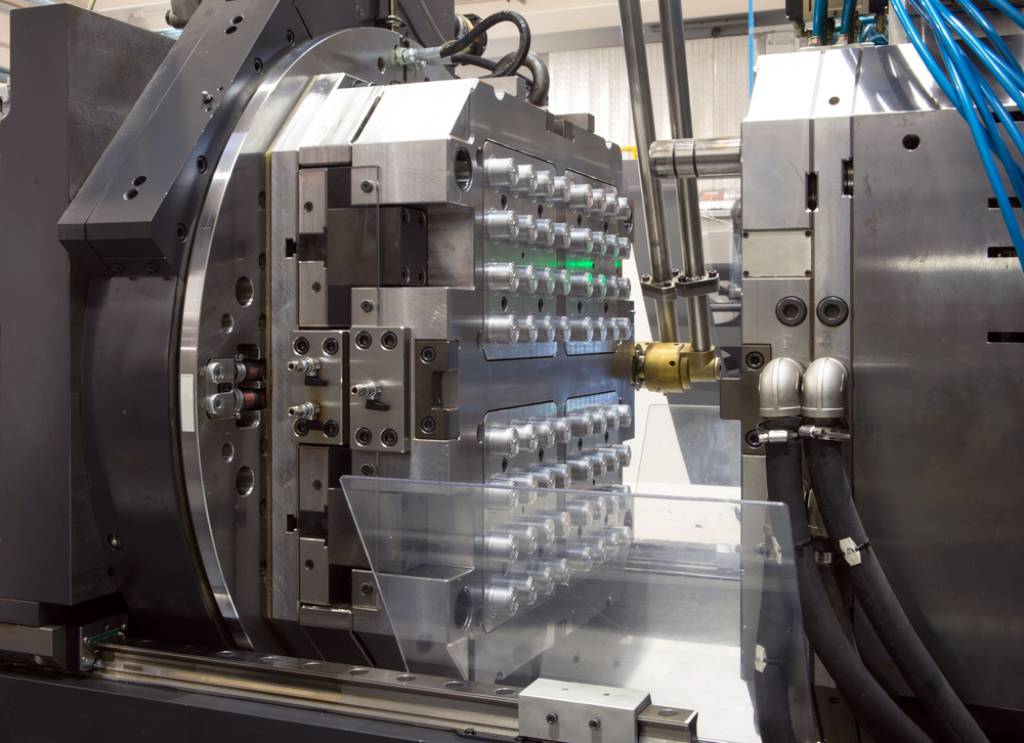
Cooling Channels
One of the most important yet often overlooked elements of mold design is the cooling system.
This raises an important question:
Why is cooling so critical in injection molding?
Cooling channels circulate temperature-controlled water through the mold, allowing the plastic material to solidify quickly and evenly. Efficient cooling improves production speed and prevents defects such as warping or shrinkage.
Ejector Systems
After the plastic part cools, it must be removed from the mold. Ejector pins and plates push the finished component out of the cavity without damaging its shape or surface.
Guide Pillars
Guide pillars ensure that the two halves of the mold align perfectly during each injection cycle. Even a small misalignment could damage the mold or produce defective parts.
Why Is Precision So Important in Injection Mold Manufacturing?
Consider the following question:
What happens if a mold cavity is slightly inaccurate?
Even a very small dimensional error can lead to serious production problems such as:
- incomplete filling of the mold
- surface defects on the final product
- dimensional inaccuracies in plastic parts
- inefficient cooling cycles
Because injection molds operate in high-pressure environments and are used repeatedly over long production runs, their components must be manufactured with extremely tight tolerances.
High-quality molds ensure:
- accurate part geometry
- smooth surface finishes
- consistent material flow
- efficient heat transfer and cooling performance
The Role of CNC Machining in Injection Mold Production
So how do engineers achieve the precision required for mold components?
The answer lies in advanced CNC machining technologies.
CNC machining allows engineers to produce mold cavities, cores, and inserts with micron-level accuracy. Digital machining programs guide cutting tools along highly precise toolpaths, ensuring that complex geometries are manufactured exactly as designed.
Key advantages of CNC machining in mold production include:
- extremely precise dimensional control
- excellent surface finishing capabilities
- ability to machine complex 3D cavity shapes
- repeatable machining quality for mold components
- reduced manual errors in tooling production
Modern mold manufacturing often uses multi-axis CNC machining centers, which allow engineers to machine complex surfaces in fewer setups while maintaining high accuracy.
Engineering Thinking Behind Advanced Mold Design
Injection mold manufacturing is not only about machining technology. It also requires deep engineering understanding of material behavior, production efficiency, and product design.
Engineers must carefully analyze:
- plastic material flow behavior
- shrinkage and cooling dynamics
- gate and runner design
- mold durability and wear resistance
A well-designed mold allows molten plastic to flow evenly, cool efficiently, and release smoothly after each cycle. This engineering precision is what makes high-volume plastic manufacturing possible.
Aspava Makina: Engineering-Driven Mold Manufacturing
In the field of injection mold manufacturing, the difference between a standard mold and a high-performance mold often comes down to engineering expertise and precision machining capability.
Aspava Makina approaches mold manufacturing with an engineering-driven mindset. By combining modern design technologies with precision machining expertise, the company develops advanced tooling solutions tailored to industrial production needs.
Aspava Makina’s capabilities include:
- precision injection mold design and manufacturing
- advanced CNC machining for mold cavities and cores
- optimized cooling channel engineering for improved cycle times
- durable tooling solutions for high-volume plastic production
Through detailed engineering analysis and high-precision machining processes, Aspava Makina ensures that every mold system delivers reliable performance, long tool life, and consistent production quality.
Conclusion
Injection mold manufacturing plays a central role in modern plastic production. Nearly every industry—from automotive and electronics to healthcare and consumer products—depends on precision molds to produce reliable plastic components at scale.
The success of injection molding depends on accurate mold design, advanced CNC machining, and deep engineering expertise.
Companies like Aspava Makina, with strong capabilities in mold engineering and precision manufacturing, contribute significantly to modern industrial production by delivering high-performance tooling solutions that improve manufacturing efficiency and product quality.