Explore CNC Milling and Turning Services for Industrial Components, including machining strategies, process control, precision tolerances, toolpath optimization, and advanced manufacturing technologies used in modern industry.
CNC Milling and Turning Services for Industrial Components


4
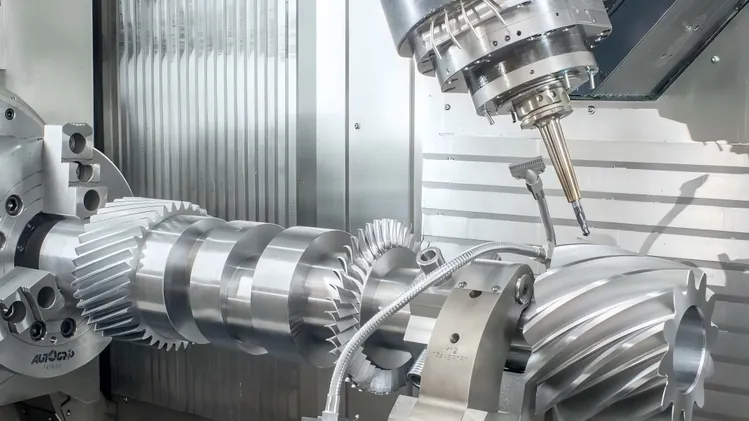
Modern industrial manufacturing relies heavily on CNC milling and turning services to produce high-precision components used in machinery, aerospace systems, energy equipment, automotive assemblies, and industrial automation systems. These machining processes form the backbone of precision engineering and allow manufacturers to produce complex parts with tight tolerances, consistent repeatability, and reliable mechanical performance.
CNC (Computer Numerical Control) machining replaces manual machine operation with computer-controlled tool movement. By using digital programs, manufacturers can precisely control cutting tools, spindle speeds, feed rates, and machining paths.
Industrial production facilities require machining processes that can deliver:
- high dimensional accuracy
- stable production repeatability
- efficient material removal rates
- consistent surface quality
- traceable production data
Companies operating with advanced machining capabilities and strong engineering infrastructure, such as ASPAVA, support industrial production by delivering precision CNC machining solutions for custom and serial manufacturing requirements.
This article explains the technical principles of CNC milling and turning services, focusing on machining strategies, process optimization, programming techniques, and quality assurance methods used in modern industrial production.
CNC Milling for Industrial Components
CNC milling is one of the most versatile machining processes used in industrial manufacturing.
In milling operations, a rotating cutting tool removes material from a fixed workpiece. The tool moves along multiple axes to generate specific part geometries.
Typical milling features include:
- flat surfaces
- slots and pockets
- drilled holes
- complex contours
- multi-surface geometries
Modern CNC milling machines often operate on multi-axis configurations.
Milling Machine Configurations
| Machine Type | Description |
|---|---|
| 3-Axis Milling | Basic machining with X-Y-Z movement |
| 4-Axis Milling | Adds rotational axis for improved accessibility |
| 5-Axis Milling | Simultaneous multi-direction machining |
Multi-axis milling systems significantly reduce setup time while allowing machining of complex parts in a single operation.
For industrial components with complicated geometry, multi-axis machining ensures better tool access and improved surface finish.
CNC Turning for Cylindrical Components
CNC turning is primarily used to manufacture rotationally symmetrical parts.
In this process:
- the workpiece rotates at high speed
- a stationary cutting tool removes material
Turning machines, commonly known as CNC lathes, are ideal for producing components such as:
- shafts
- bushings
- threaded components
- valve parts
- mechanical connectors
Turning processes include several machining operations.
Common Turning Operations
- facing
- external turning
- internal boring
- threading
- grooving
- parting off
Advanced turning centers may also include milling capabilities, creating mill-turn machining systems capable of producing complex parts in one setup.
Machining Strategy and Toolpath Optimization
Efficient machining requires careful planning of cutting strategies and toolpaths.
In modern CNC manufacturing, toolpaths are generated using CAM (Computer-Aided Manufacturing) software, which calculates optimal tool movements based on part geometry.
Key machining strategies include:
- rough machining
- semi-finishing
- finishing passes
- adaptive clearing
- contour machining
Adaptive toolpath strategies are widely used in high-performance machining because they maintain consistent tool engagement and reduce cutting forces.
Optimized toolpaths provide several advantages:
- improved machining speed
- reduced tool wear
- enhanced surface finish
- increased process stability
Efficient machining strategies are essential for maintaining productivity in industrial production environments.
CNC Programming and Process Control
CNC machines operate based on numerical control programs, commonly written in G-code and M-code.
These commands control machine movement, spindle operation, and cutting parameters.
Basic CNC Programming Example
G01 X50 Y20 Z-5 F200
This command instructs the machine to move the cutting tool along a linear path at a specified feed rate.
Advanced machining operations often require macro programming, which introduces variables and conditional logic into CNC programs.
Macro programming allows engineers to create flexible machining routines capable of handling variable part dimensions or repetitive operations.
Benefits of macro programming include:
- automated parameter adjustments
- reusable machining programs
- improved programming efficiency
Advanced programming capabilities play an important role in modern industrial machining environments.
Material Considerations in Industrial Machining
Industrial CNC machining involves a wide variety of materials, each requiring specific machining parameters.
Common materials used for industrial components include:
- aluminum alloys
- carbon steels
- stainless steels
- titanium alloys
- engineering plastics
Each material has unique properties affecting:
- cutting speed
- tool selection
- chip formation
- heat generation
Selecting the correct machining parameters is essential for maintaining tool life and ensuring dimensional accuracy.
Precision and Tolerance Control
Industrial components often require extremely tight dimensional tolerances.
Precision machining typically involves tolerances ranging from:
±0.01 mm to ±0.001 mm
Maintaining such tolerances requires:
- rigid machine structures
- precision cutting tools
- stable machining parameters
- accurate tool calibration
Modern CNC machines are equipped with digital feedback systems that continuously monitor tool position and machine accuracy.
These systems help maintain consistent machining precision throughout production.
Quality Assurance and Inspection
Quality control is a critical part of CNC machining services.
Manufacturing facilities use advanced measurement technologies to verify component dimensions.
Common inspection equipment includes:
- CMM (Coordinate Measuring Machines)
- digital calipers and micrometers
- optical measurement systems
- laser scanning devices
Inspection data is recorded and documented to ensure compliance with engineering specifications.
Reliable quality control systems ensure that industrial components meet required performance standards.
Production Repeatability in Serial Manufacturing
Repeatability is a fundamental requirement in industrial machining.
Manufacturers must be able to produce large numbers of identical components without variation.
CNC machining ensures repeatability through:
- automated machining programs
- digital process monitoring
- standardized tooling systems
- controlled machining parameters
Stable production processes allow manufacturers to maintain consistent part quality across large production volumes.
Companies with strong machining capabilities and process control systems, such as ASPAVA, maintain reliable production environments capable of supporting both prototype manufacturing and serial industrial production.
Digital Manufacturing and Process Monitoring
Modern CNC machining environments increasingly integrate digital production monitoring systems.
These systems collect and analyze real-time machine data to improve operational efficiency.
Digital monitoring platforms track:
- machine utilization
- spindle load
- machining cycle time
- tool wear conditions
Manufacturing Execution Systems (MES) can integrate machining operations with production planning and quality documentation.
Digital manufacturing improves process transparency and supports continuous production improvement.
SEO Keywords for CNC Milling and Turning Services
To improve search engine visibility, important keywords include:
- CNC milling services
- CNC turning services
- industrial CNC machining
- precision CNC machining services
- CNC machining for industrial components
- CNC milling and turning manufacturer
- multi-axis CNC machining
- custom CNC machining services
These keywords help improve search engine ranking for CNC manufacturing content.
Conclusion
CNC milling and turning services play a crucial role in producing precision industrial components used in modern machinery and engineering systems. By combining advanced machining technologies, optimized toolpaths, and strict quality control procedures, manufacturers can produce complex components with exceptional accuracy and repeatability.
Modern CNC machining facilities rely on digital programming systems, multi-axis machining technologies, and advanced inspection methods to ensure reliable production performance.
Manufacturers with strong engineering expertise and advanced machining infrastructure, such as ASPAVA, support modern industrial production by providing precision machining solutions for demanding industrial applications.
As manufacturing technologies continue to evolve, CNC milling and turning will remain essential processes in high-precision industrial production.