Precision Model Manufacturing for Aerospace, Marine and Composite Industries
In modern engineering industries, rapid model and prototype production plays a critical role in product development. CNC machining of high-density foam materials has become one of the most efficient methods for producing lightweight models, molds, and prototype structures.
Engineering companies such as ASPAVA Engineering use advanced CNC machining technologies to produce high-precision foam models used in industries such as aerospace, marine manufacturing and composite production.
Using modern multi-axis CNC machines, complex geometries can be machined accurately from structural foam materials such as Divinycell H60 and H80.
High Density Structural Foam Materials
Structural foams like Divinycell are widely used core materials in composite manufacturing. These materials combine lightweight properties with structural rigidity, making them suitable for applications where weight reduction is critical.
Common foam densities include:
- Divinycell H60
- Divinycell H80
These materials are frequently used in industries such as:
- aerospace engineering
- marine and boat manufacturing
- wind energy
- composite tooling
Because these materials are easy to machine, they are also ideal for CNC-machined prototype models.
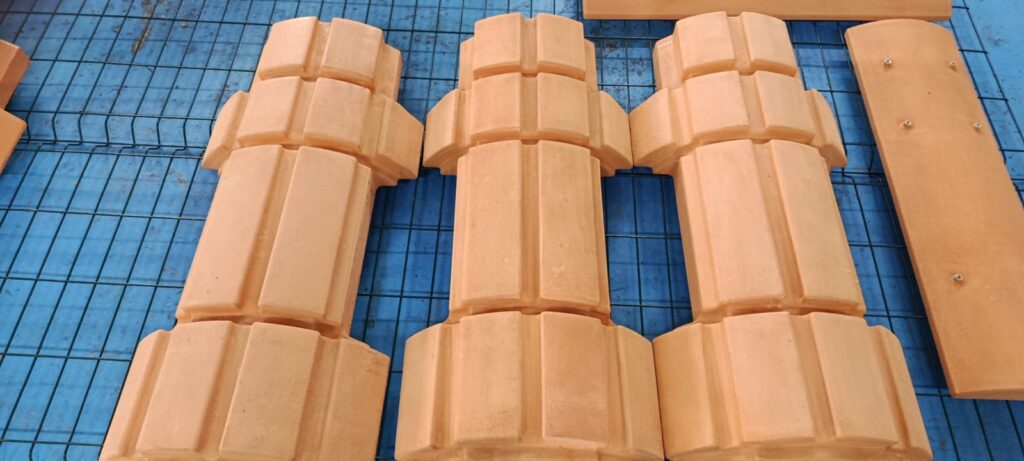
CNC Foam Machining at ASPAVA
At ASPAVA, CNC machining technologies are used to manufacture precision foam models for various industrial applications.
Using CAD/CAM design and multi-axis CNC machines, foam blocks can be transformed into accurate 3D models used for engineering testing, composite mold production and prototype development.
ASPAVA’s machining capability allows complex shapes to be produced from structural foam materials with high dimensional accuracy.
Applications include:
- aerospace prototype models
- composite mold tooling
- marine structural models
- industrial design prototypes
Advantages of CNC Foam Machining
CNC machining of structural foam materials offers several advantages.
Precision
Modern CNC technology allows highly accurate machining of complex shapes.
Lightweight Structures
Foam models are significantly lighter than metal prototypes.
Rapid Production
CNC machining allows quick transformation of CAD designs into physical models.
Flexible Design
Engineers can easily test multiple designs using foam prototypes.
Industrial Applications
CNC machining of high density foam materials is widely used in advanced industries.
Aerospace
Foam models are used for aerodynamic testing, composite structures and prototype aircraft components.
Marine Industry
Boat manufacturers use structural foam cores in composite hulls and deck structures.
Wind Energy
Wind turbine blade prototypes often require foam core models.
Composite Manufacturing
Foam machining is widely used for mold patterns and tooling structures.
Advanced CNC Model Manufacturing
Companies with advanced machining capabilities can produce highly complex foam models for modern engineering industries.
With its CNC machining expertise, ASPAVA Engineering supports the production of precision foam models used in aerospace, marine and composite manufacturing industries.
By combining engineering knowledge with modern CNC technologies, ASPAVA provides reliable solutions for prototype manufacturing and composite tooling.
Conclusion
CNC machining of high-density structural foam materials has become an essential part of modern prototype manufacturing.
Industries such as aerospace, marine engineering and composite production rely on accurate foam models for product development and testing.
With advanced machining capabilities and engineering expertise, ASPAVA Engineering contributes to the production of precision foam models used in modern industrial applications.