Automatic Cosmetic Filling Machine vs Manual Machines comparison guide. Learn the key differences in speed, cost, accuracy, and production efficiency for cosmetic manufacturers.
Automatic Cosmetic Filling Machine vs Manual Machines
Cosmetic manufacturers often face an important decision when setting up or upgrading a production line: choosing between an automatic cosmetic filling machine and manual filling machines. This choice can directly affect production capacity, labor costs, product consistency, and overall factory efficiency.
An automatic cosmetic filling machine is designed to perform filling operations with minimal human intervention. These machines use programmable systems, sensors, and automated conveyors to fill products such as creams, lotions, lip balms, foundations, and liquid cosmetics with high precision.
On the other hand, manual filling machines require operators to control the filling process, measure products, and manage containers manually. While manual systems are typically cheaper and simpler, they often lack the speed and consistency needed for large-scale cosmetic manufacturing.
The decision between these two machine types depends on several factors including production volume, budget, factory size, and automation goals. Small cosmetic startups may initially prefer manual machines due to their lower cost, while large manufacturers often invest in automatic systems to achieve higher efficiency and scalability.
In this guide, we will explore the major differences between automatic cosmetic filling machines and manual filling systems, helping cosmetic manufacturers choose the right equipment for their production needs.
What is an Automatic Cosmetic Filling Machine
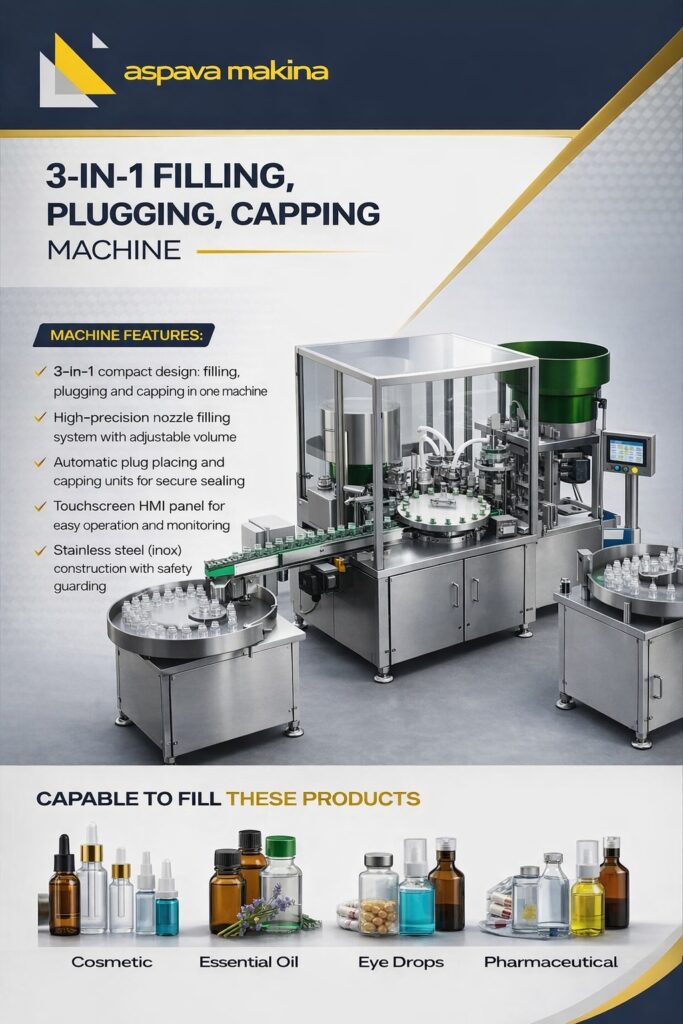
An automatic cosmetic filling machine is an advanced production system designed to automatically fill cosmetic products into containers such as bottles, jars, tubes, and cartridges. These machines are commonly used in medium and large cosmetic factories producing products like:
- face creams
- lotions
- liquid foundations
- lip gloss
- shampoo and conditioners
- cosmetic serums
Automatic machines integrate several industrial technologies including PLC control systems, servo motors, and conveyor automation. These systems ensure that every container receives the correct amount of product without manual measurement.
Key Components of Automatic Filling Machines
Typical automatic cosmetic filling systems include the following components:
- Product hopper or tank for storing cosmetic formulations
- Precision dosing pumps that control filling volume
- Automatic conveyor systems for moving containers
- Nozzle filling heads designed for different viscosities
- PLC touch screen control panels
- Sensor-based container detection systems
Because of these advanced features, automatic machines can fill thousands of containers per hour while maintaining high product accuracy and hygiene standards.
What are Manual Cosmetic Filling Machines
Manual filling machines are basic equipment used in small-scale cosmetic production environments. Instead of automated systems, the operator controls the filling process by hand.
These machines are commonly used by:
- small cosmetic startups
- laboratory-scale cosmetic production
- handmade cosmetic brands
- pilot production facilities
A typical manual cosmetic filling machine uses a hand lever or foot pedal system to control the filling nozzle. The operator places the container under the nozzle and manually activates the machine to dispense the product.
Main Components of Manual Filling Machines
Manual systems are much simpler compared to automatic machines. Most units include:
- filling cylinder or piston system
- manual lever mechanism
- adjustable filling volume control
- stainless steel filling nozzle
Although these machines are affordable and easy to operate, they are generally limited in speed and consistency compared to automated systems.
Production Speed Comparison
One of the most important differences between automatic cosmetic filling machines and manual machines is production speed.
Automatic Cosmetic Filling Machines
Automatic systems are designed for high-capacity industrial production. Depending on the model, they can fill:
- 2,000 to 10,000 units per hour
These machines work continuously with conveyor systems that automatically transport containers through the filling station.
Manual Filling Machines
Manual machines depend heavily on operator performance. In most cases, manual filling systems can produce approximately:
- 200 to 600 units per hour
This difference becomes critical when production demand increases.
Speed Comparison Table
| Machine Type | Production Speed |
|---|---|
| Manual Filling Machine | 200 – 600 units/hour |
| Semi Automatic Filling Machine | 800 – 2,000 units/hour |
| Automatic Cosmetic Filling Machine | 2,000 – 10,000 units/hour |
For factories producing large volumes of cosmetics, automation significantly improves productivity.
Accuracy and Product Consistency
Cosmetic products require precise filling to maintain quality and regulatory compliance.
Automatic cosmetic filling machines use servo-controlled dosing systems to ensure every container receives the exact amount of product. This reduces product waste and guarantees uniform packaging.
Manual machines rely on operator control, which can result in:
- inconsistent filling levels
- product loss
- slower quality control processes
For brands producing premium cosmetic products, consistency is critical for maintaining customer trust and brand reputation.
Labor Requirements
Labor costs are another major factor when comparing manual and automatic filling systems.
Manual Machines
Manual filling equipment requires multiple operators to manage production tasks including:
- placing containers
- operating the filling mechanism
- moving filled containers to packaging
This can increase labor costs and reduce operational efficiency.
Automatic Machines
Automatic cosmetic filling machines significantly reduce labor requirements. A single operator can supervise an entire production line including filling, capping, and packaging systems.
This leads to:
- lower labor costs
- faster production
- improved workflow
Cost Comparison
Initial investment is often the main reason companies consider manual filling machines.
Manual Machine Price Range
Manual cosmetic filling machines typically cost between:
$500 – $5,000
These machines are affordable for small startups or laboratory production.
Automatic Cosmetic Filling Machine Price Range
Industrial automatic filling systems are more expensive but offer higher productivity. Prices typically range between:
$15,000 – $150,000
The final price depends on factors such as:
- machine capacity
- number of filling heads
- automation level
- container type compatibility
Although the initial investment is higher, automated systems usually deliver faster return on investment due to increased production capacity.
When Should Cosmetic Manufacturers Choose Automatic Machines
Automatic cosmetic filling machines are ideal for factories that:
- produce high product volumes
- export cosmetic products internationally
- require strict quality control
- want to reduce labor costs
- plan to scale production
Large cosmetic brands and contract manufacturers often rely on fully automated filling lines to maintain production efficiency.
When Manual Machines Are a Better Option
Manual filling machines may still be suitable for certain situations, such as:
- small cosmetic startups
- experimental product development
- low production volumes
- handmade cosmetic brands
These machines provide a low-cost entry point into cosmetic manufacturing.
FAQ – Automatic Cosmetic Filling Machine vs Manual Machines
What is the difference between automatic and manual cosmetic filling machines?
Automatic machines use programmable systems and conveyors to fill products automatically, while manual machines require operators to control the filling process.
Which filling machine is better for cosmetic factories?
Automatic filling machines are better for large cosmetic factories because they offer higher speed, better accuracy, and reduced labor costs.
Are manual filling machines suitable for startups?
Yes, manual filling machines are often used by small cosmetic startups due to their low initial investment.
How fast can an automatic cosmetic filling machine work?
Industrial automatic filling machines can produce between 2,000 and 10,000 units per hour, depending on the model.
Do automatic filling machines improve product consistency?
Yes. Automated machines use precision dosing systems to ensure each container receives the exact same amount of product.
Can manual machines be upgraded to automatic systems?
Yes. Many manufacturers start with manual or semi-automatic machines and later upgrade to fully automated production lines.
Why Choose Aspava Makina
Aspava Makina is a trusted manufacturer of industrial cosmetic production machines. The company provides advanced automation solutions for cosmetic factories worldwide.
Manufacturer in Turkey
Aspava Makina designs and produces high-quality cosmetic filling machines in Turkey with international manufacturing standards.
Custom Machine Production
Machines can be customized according to factory capacity, product type, and automation level.
Industrial Automation Solutions
Aspava Makina develops complete production lines including filling, mixing, packaging, and automation systems.
Export Ready Machines
All machines are built for international export markets and comply with industrial quality standards.
Contact Aspava Makina
If you are looking for automatic cosmetic filling machines, lipstick production lines, or cosmetic factory equipment, Aspava Makina provides professional industrial solutions for cosmetic manufacturers worldwide.